
Last updated November 3, 2026
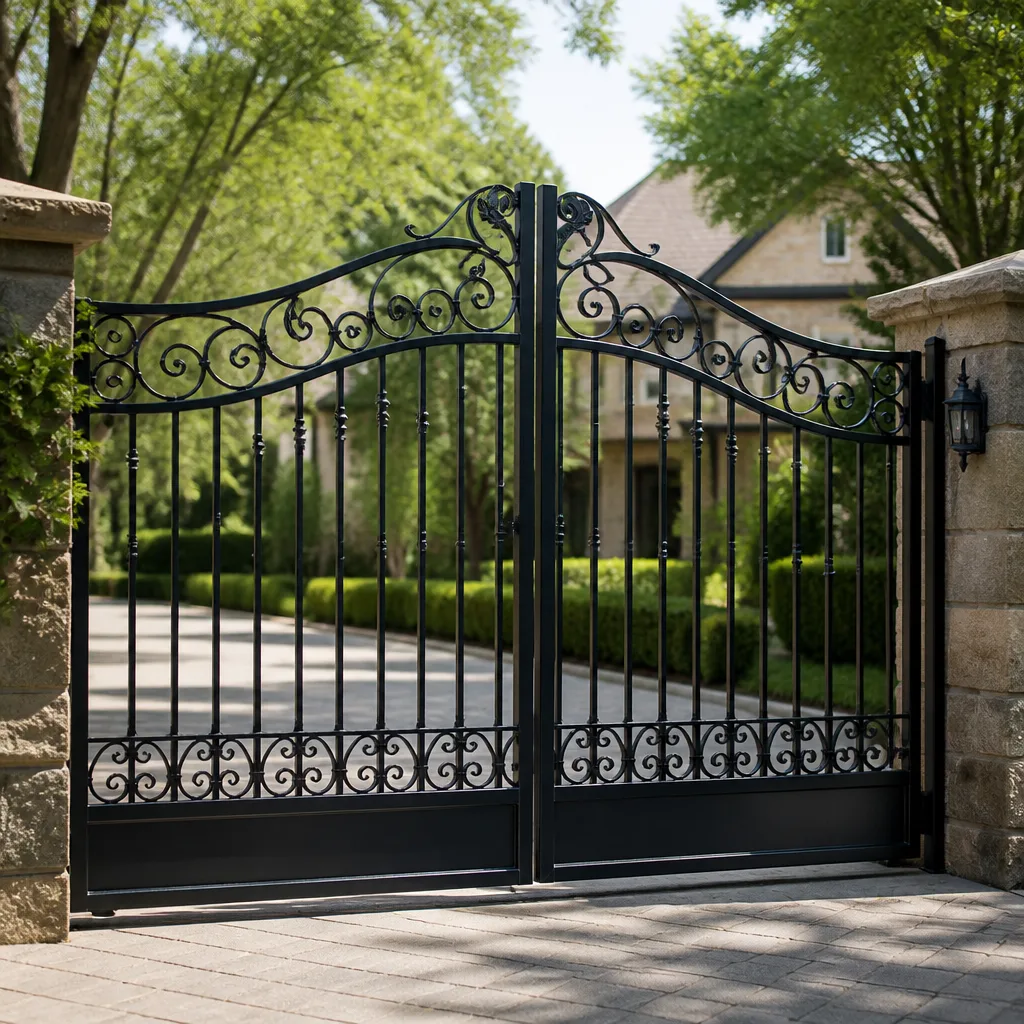 Wrought iron
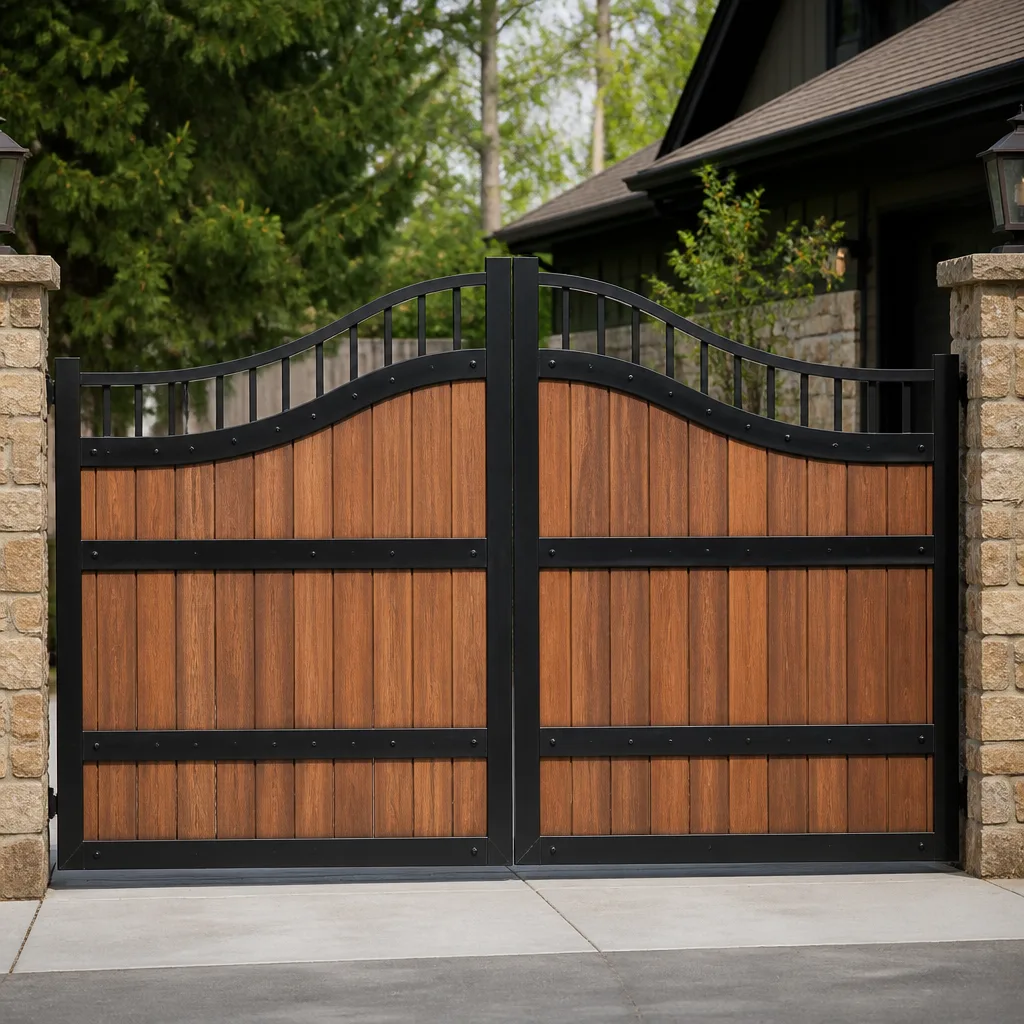 Wood & steel frame
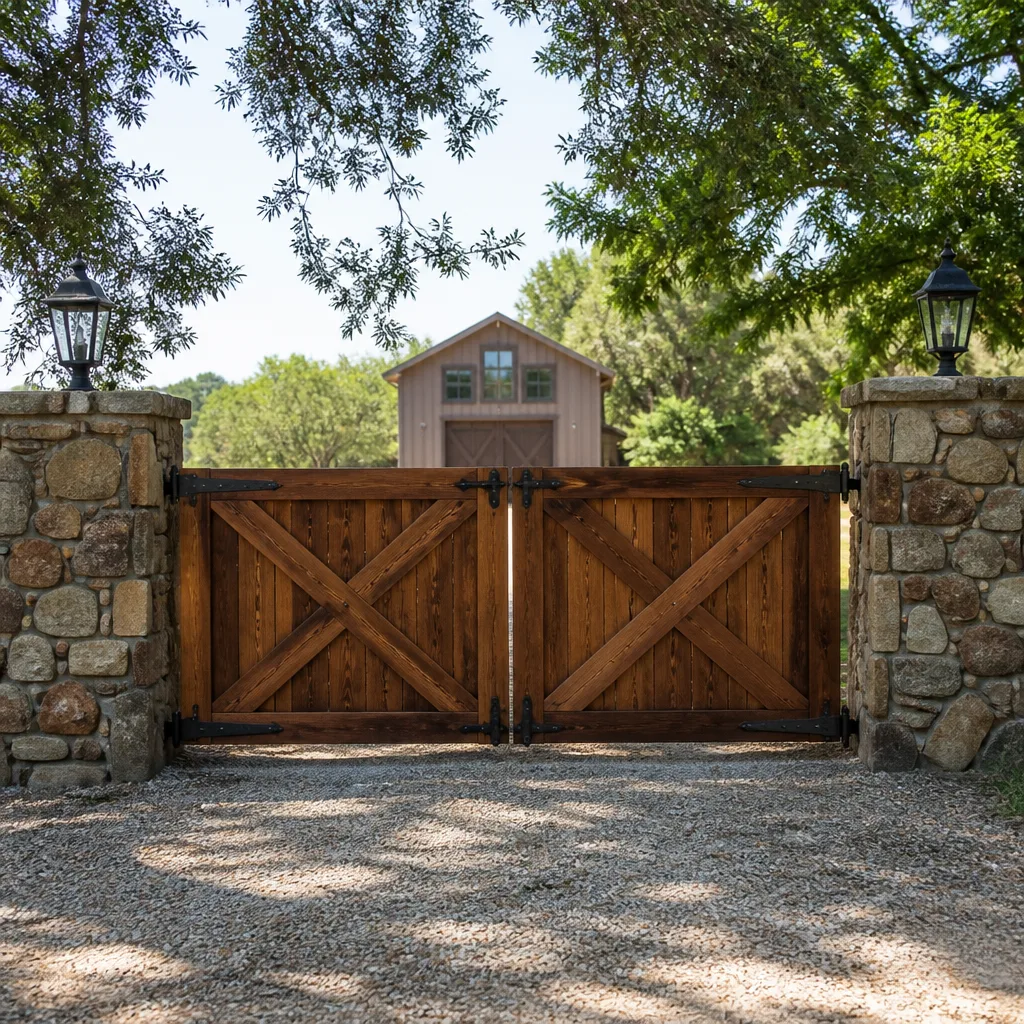 Farm & ranch
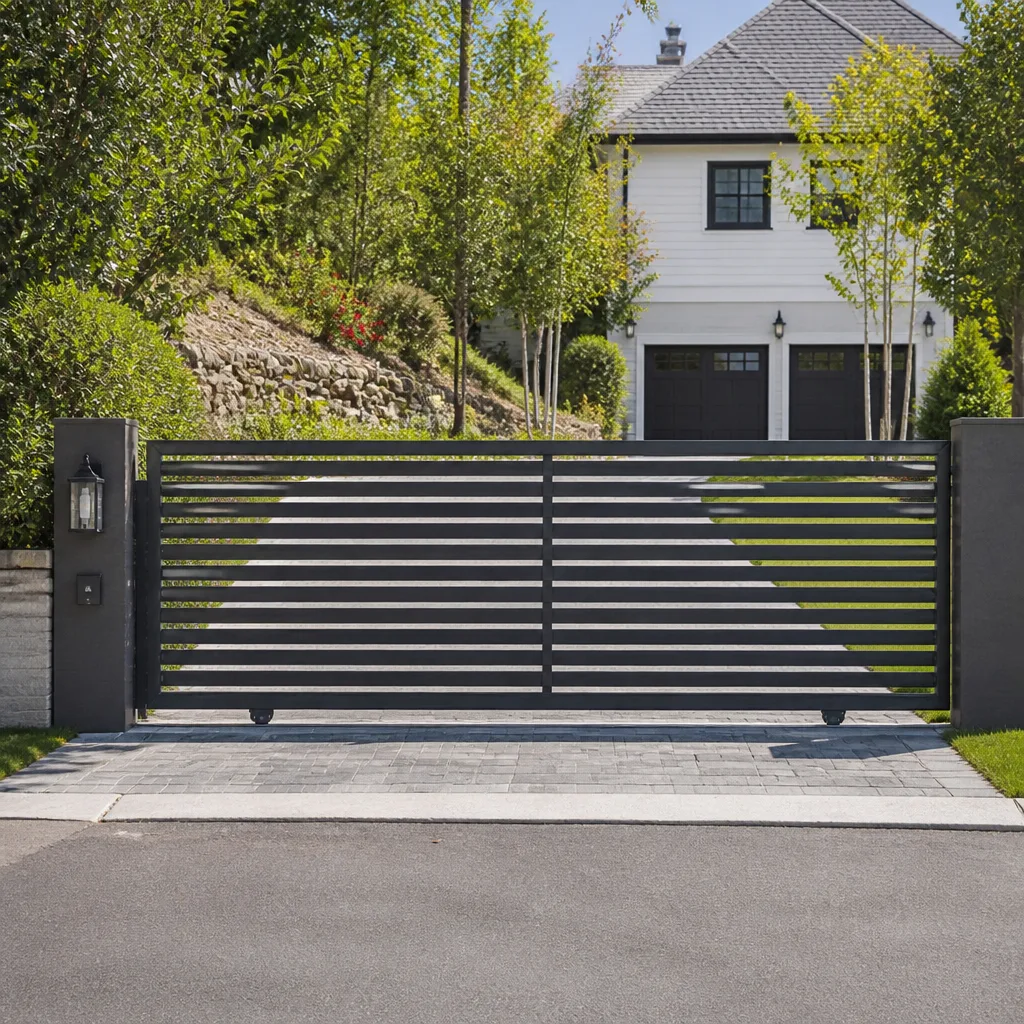 Sliding driveway gates
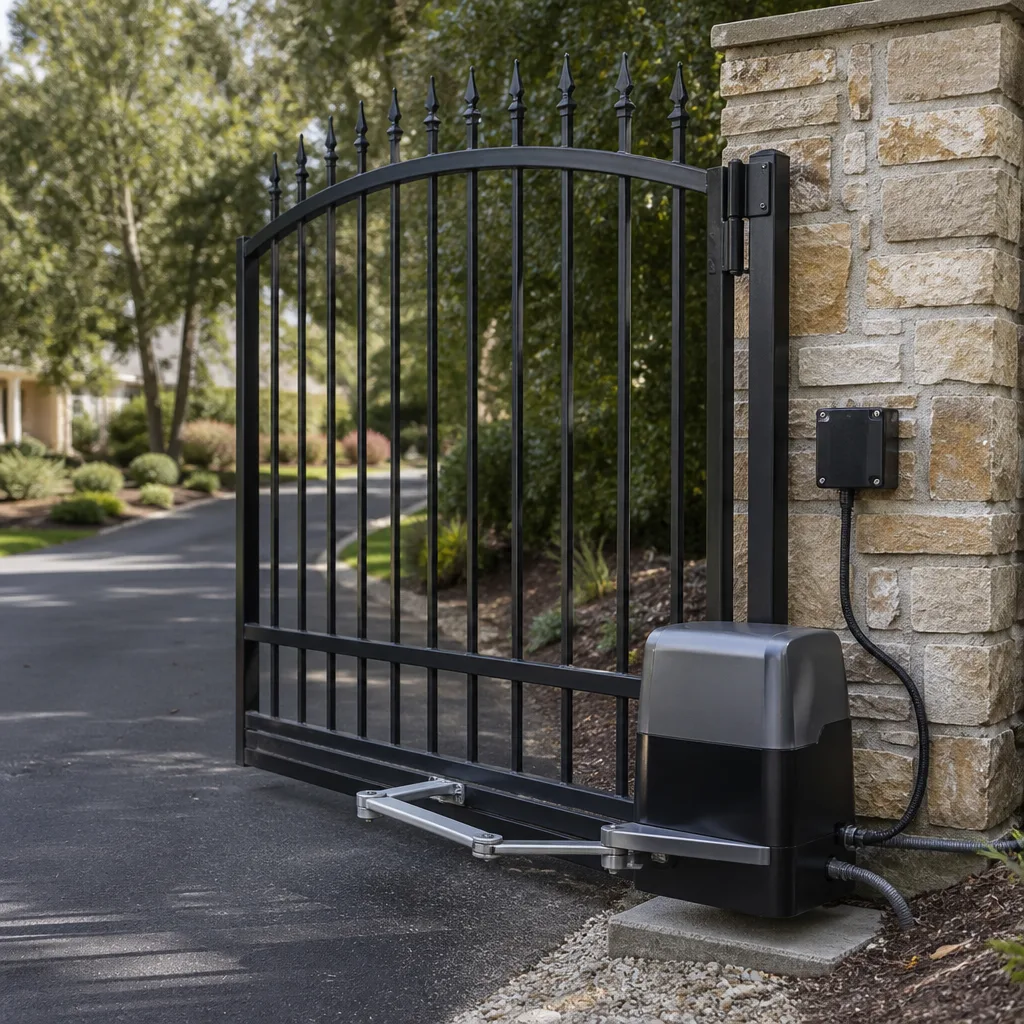 LiftMaster operators
Free on-site gate assessment - hinges, posts, and your LiftMaster or Nice gate operator checked before anything is quoted
The assessment is free and the quote is the invoice.
Get your free estimateThe Complete Gate Repair Guide for Del Paso Park Homeowners
The average residential gate has 14 points of potential failure. Most repair guides cover three of them. That’s why homeowners in Del Paso Park end up fixing the same gate twice in a season: the symptom gets addressed, but the interacting system behind it keeps generating new problems. This guide maps all three layers of a gate system – the mechanical hardware, the operator motor, and the control board – so you know exactly what broke, what needs attention next, and what genuinely requires gate repair by a specialist. We’ve spent years working on gates throughout Del Paso Park, and the pattern is consistent: the folks who understand their gate’s three layers spend less money and less time waiting on repairs.
Styles & brands we work with
- Wrought iron
- Wood & steel frame
- Farm & ranch
- Sliding driveway gates
- LiftMaster operators
Quick Answer
Most gate failures in Del Paso Park trace to one of three interacting layers: mechanical hardware (hinges, wheels, tracks), the operator motor (gears, capacitors, limit switches), or the control board (relays, receivers, safety circuits). Fixing only one layer without inspecting the others is why gates fail again within weeks. Start with a visual mechanical inspection, listen to the operator motor, then test the control board last – in that order.
Table of Contents
- How Del Paso Park’s Climate Accelerates Gate Wear
- The Three Systems You’re Actually Repairing
- The Inspection Sequence: Mechanical, Operator, Board
- DIY-Safe Repairs vs. Specialist Work
- Brand-Specific Failure Patterns: LiftMaster, FAAC, BFT, Linear
- Documenting Your Gate Before It Breaks
- Common Mistakes to Avoid
- When to Call a Professional
- Frequently Asked Questions
- The Bottom Line
Before diving in, a quick note on scope: this guide covers repair, electric gate diagnostics, and what a full gate installation in Robla involves if replacement becomes necessary. If you’re in a neighboring area, our gate repair in Robla page covers nearby service specifics. And if your gate is automated, the electric gate repair in Robla guide goes deeper on motor and board diagnostics. For now, let’s start with what Del Paso Park’s environment does to gate hardware.
How Del Paso Park’s Climate Accelerates Gate Wear
Del Paso Park sits in the Sacramento Valley’s heat and dust corridor. Summer temperatures routinely climb past 95 degrees, and the dry season means fine particulate dust settles on everything – including the moving parts of your gate. This isn’t a cosmetic issue. Heat and dust interact with gate hardware in specific, predictable ways that homeowners in cooler or coastal climates never see.
Powder-coated steel gates in Del Paso Park typically show first rust at the hinge welds and the bottom rail within five to seven years. The dust acts as an abrasive: every time the gate swings or slides, microscopic particles grind between the hinge pin and the bushing. Add the expansion and contraction from 40-degree temperature swings between night and day, and hinge tolerances open up faster than the manufacturer expected. We regularly see Del Paso Park gates with hinge play of a quarter inch or more – enough to make the gate sag, drag on the ground, and eventually bind against the latch post.
Nylon gears inside operators suffer the same fate. The gear teeth in a LiftMaster or FAAC operator are designed to wear gradually, but Sacramento Valley heat softens nylon slightly while dust particles embed in the tooth faces. The result is accelerated wear in the exact spot where the gear meshes with the worm drive. In our experience, nylon operator gears in Del Paso Park fail 20 to 30 percent sooner than the same parts in coastal climates. That’s not a guess – it’s a consistent pattern across the hundreds of gates we’ve serviced in this area.
Solar-powered gate systems, popular in Del Paso Park’s newer subdivisions, face a third challenge. Dust film on a solar panel’s surface reduces charging efficiency by 10 to 15 percent, and in the Sacramento summer that means the battery never quite reaches full charge. By late August, when nights are warm and the gate cycles more often as people come and go, a marginally charged battery fails. The homeowner calls about a dead gate, but the root cause is a dirty panel that was fully functional in May.
What this means practically: any gate repair in Del Paso Park should include a dust and heat audit, not just a fix for the immediate symptom. A hinge that’s been baking and grinding for three Del Paso Park summers won’t be solved by tightening a bolt. The bushing is gone, the pin is scored, and the fix is replacement – not adjustment.
The Three Systems You’re Actually Repairing
Every automatic gate, regardless of brand or style, is three systems stacked on top of each other. When one fails, the strain shifts to the other two. That’s the core insight most homeowners – and frankly, some repair techs – miss. Let’s break down what each system does and how it fails.
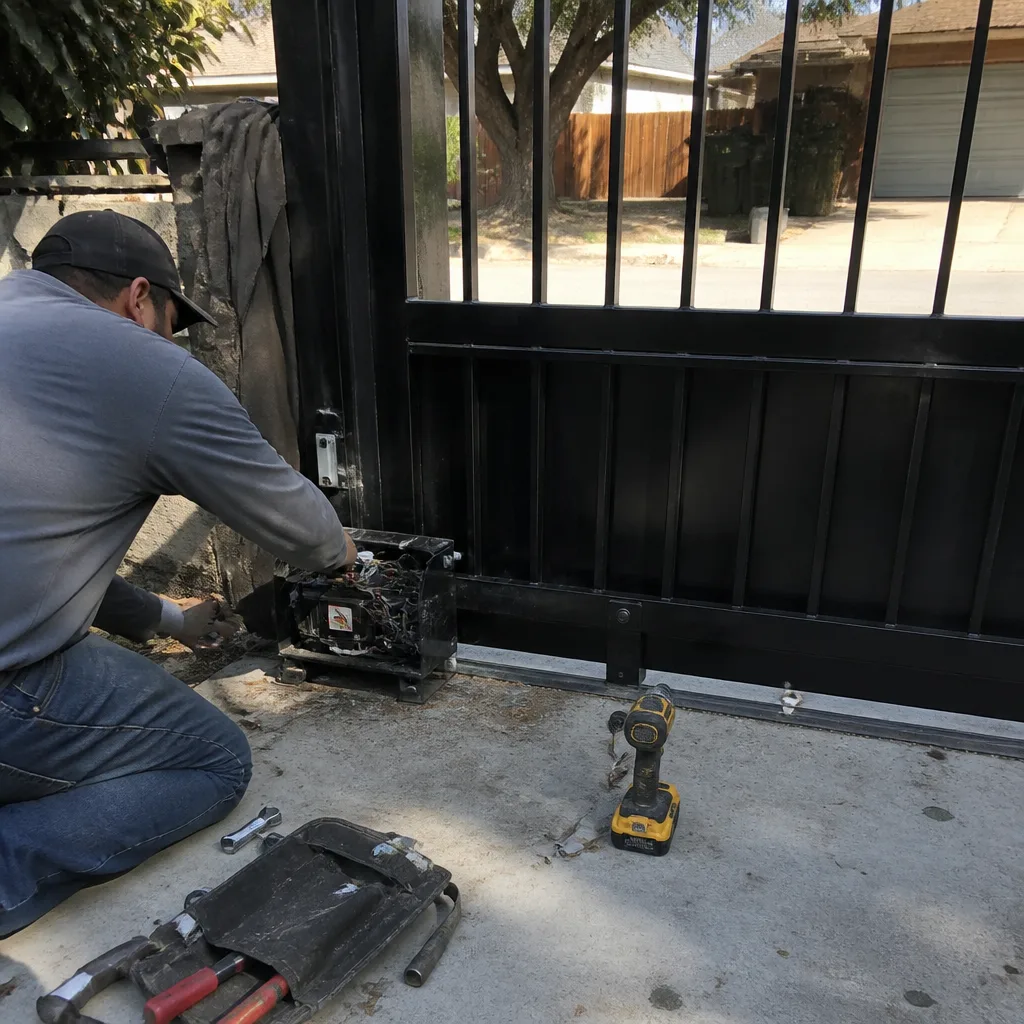
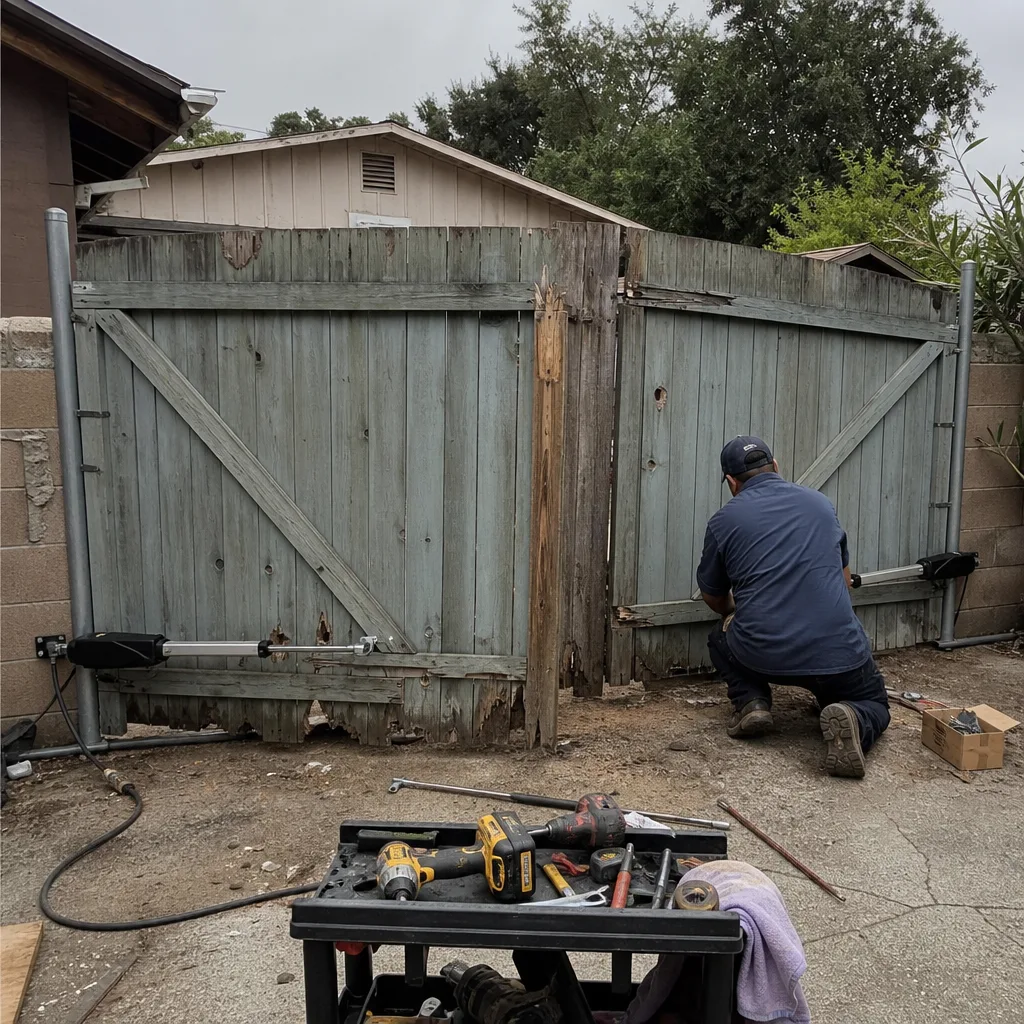
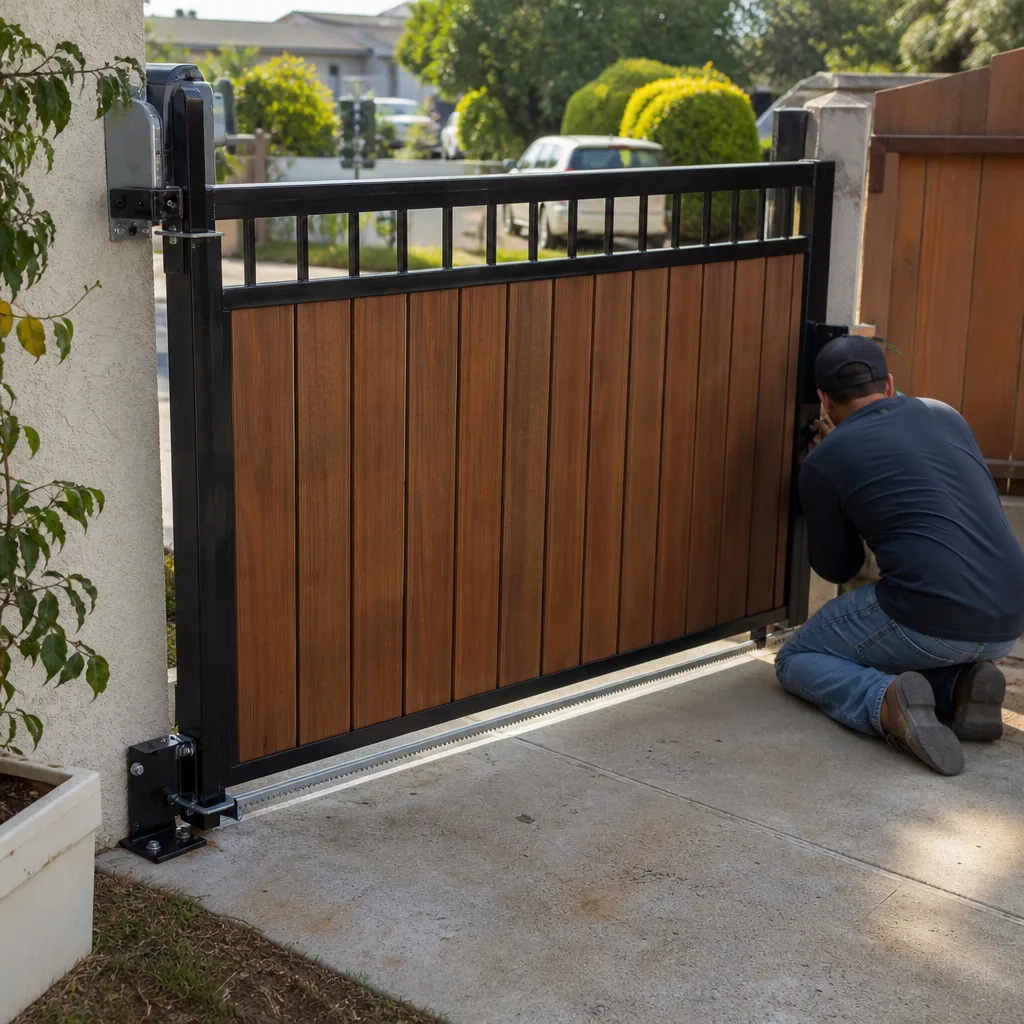
System One: Mechanical Hardware. This is everything that physically moves: hinges, wheels, track, chain, belt, and the gate leaf itself. On a sliding gate in Del Paso Park, the critical wear points are the rollers and the track. On a swing gate, it’s the hinges and the latch. Mechanical failures announce themselves with visible symptoms: the gate sags, scrapes, wobbles, or needs a shove to get moving. These failures are the easiest to diagnose and the easiest to postpone – which is exactly why they cascade into worse problems.
System Two: The Operator Motor. The motor converts electrical energy into the mechanical force that moves the gate. Inside the operator housing, a motor drives a gear train that ultimately turns the drive shaft. The most common failure points are the capacitor (which gives the motor its starting kick), the limit switches (which tell the motor where the gate is in its travel), and the gears themselves. A motor working against a binding mechanical system draws more current, runs hotter, and dies sooner. That’s the cascade: neglected hardware kills operators.
System Three: The Control Board. This is the brain. The board interprets signals from remotes, keypads, safety sensors, and limit switches, then decides when to start the motor and when to stop it. Control board failures look confusing because the symptoms don’t point obviously at a board: the gate opens but won’t close, or closes halfway and reverses, or ignores the remote entirely. Board failures are also where misdiagnosis runs rampant. We’ve lost count of the Del Paso Park gates that arrived with a replaced board still misbehaving because the actual fault was a corroded sensor wire two feet from the board’s connector.
Here’s the sequence that matters: a mechanical problem creates resistance. Resistance creates motor strain. Motor strain creates electrical noise on the board’s inputs. The board misreads the noise as a fault and shuts down or behaves erratically. If you only replace the board, the mechanical problem remains, and the new board fails the same way within months. Our repair-first approach exists because we’ve watched this cycle too many times. We fix what’s there before recommending a replacement.
The Inspection Sequence: Mechanical, Operator, Board
Diagnosing a gate problem in the wrong order is how you end up paying for parts that were never broken. Here’s the sequence we follow on every service call in Del Paso Park, and it works just as well for a homeowner doing a first-assessment before calling. For The Complete Guide to Gate Repair in Del Paso Park, see our detailed walkthrough.
Step 1: Mechanical inspection – five minutes, zero tools. Disconnect the operator (there’s typically a release handle or lever on the operator housing). Manually move the gate through its full travel. A healthy gate moves smoothly with one hand and stays put when you stop pushing. If the gate binds, scrapes, sags, or feels gritty, you’ve found a mechanical fault. Write down exactly where in the travel the problem occurs – that detail saves your technician time and your wallet money.
Step 2: Operator observation – three minutes, with the operator reconnected. Reconnect the operator and trigger a full open-close cycle. Listen. A healthy operator hums quietly with a consistent pitch. A struggling operator groans, changes pitch, or clicks repeatedly without moving. Feel the operator housing – excessive heat after one cycle means the motor is working too hard, almost always due to mechanical resistance or a failing capacitor. Watch the gate’s speed: if it’s noticeably slower than it was six months ago, the motor is degrading.
Step 3: Control board testing – only after Steps 1 and 2 check out clean. If the mechanical system moves freely and the operator runs without strain, then and only then do you start looking at the board. Test each input: remote, keypad, safety sensors, manual button. Narrow down which input fails and under what conditions. A board that works at 8 a.m. but fails at 4 p.m. is often heat-related – a known pattern in Del Paso Park summers when afternoon garage temperatures climb past 110 degrees. That’s a board thermal fault, not a phantom.
Skipping the order leads to misdiagnosis. A garage-door company that dabbles in gates will often start at the board because that’s where the error codes are. A gate specialist starts at the mechanical layer because that’s where most problems actually begin. One call to us covers the full sequence, and it’s why we can often quote a fixed price before we start the repair.
DIY-Safe Repairs vs. Specialist Work
Some gate maintenance is genuinely doable for a careful homeowner. Other repairs carry crush hazards, entrapment liability, and code compliance requirements that belong with a trained professional. See our DIY vs Professional Gate Repair: The Del Paso Park Homeowner’s Decision Guide for the honest breakdown.
DIY-safe tasks:
- Cleaning and lubricating hinges, rollers, and track with a dry silicone spray (never grease – grease attracts Del Paso Park dust and accelerates wear).
- Cleaning solar panels with water and a soft cloth, checking for dust film every two to three weeks during Sacramento’s dry season.
- Tightening visible bolts and set screws on the gate frame and post brackets – if you can reach them without disassembling the gate.
- Replacing remote batteries and reprogramming a remote using the manufacturer’s button sequence.
- Clearing debris from the gate track and the gate’s path.
Specialist work (do not attempt these yourself):
- Any repair involving the gate’s motor, gear train, or drive mechanism. Operators store significant mechanical energy, and a gate that falls or cycles unexpectedly can cause serious crush injuries.
- Limit switch replacement or adjustment. These switches control where the gate stops, and an incorrect setting means the gate keeps pushing after it should stop – eventually bending the gate or pulling itself off its mounts.
- Control board replacement and rewiring. Gate control boards in the U.S. are governed by UL 325 entrapment protection standards. Wiring a safety sensor incorrectly creates a real liability, and ‘almost correct’ doesn’t count.
- Any repair on a gate that serves multiple residences, a community entrance, or commercial property. The liability and code compliance stakes go up significantly.
- Spring replacement on any gate that uses a torsion or tension spring system. These springs store enough energy to cause serious injury if they let go.
If you’re not sure which category your problem falls into, call before you disassemble anything. We’d rather answer a quick question than walk into a half-disassembled gate with a damaged operator because a spring let go mid-repair. Electric gate specialists – not generalists – is how we describe ourselves, and that distinction matters most on the repairs with the highest stakes.
Brand-Specific Failure Patterns: LiftMaster, FAAC, BFT, Linear
Here’s something most Del Paso Park homeowners don’t realize: the same fault condition produces different symptoms depending on your operator’s brand. Knowing your brand’s pattern saves diagnostic time and helps you describe the problem accurately on the phone. We work on your brand – not just gates in general. From a stuck residential gate to a commercial FAAC operator, we’ve seen it.
LiftMaster residential operators (the most common brand we see in Del Paso Park single-family homes) tend to fail first at the capacitor. The symptom: the gate hums but doesn’t move, or moves in one direction only. LiftMaster boards are generally robust, which means a LiftMaster that’s misbehaving is more often mechanical or motor-level than board-level. If your LiftMaster remote stops working but the manual button works, check the board’s receiver module before assuming the remote is dead.
FAAC operators lean commercial-grade, and they’re built with tighter tolerances and more sophisticated boards. FAAC failures in Del Paso Park are typically board-level: blown relays, failed input channels, or corrupted memory after power surges. The board is the first suspect on a FAAC that’s misbehaving, which is the opposite of LiftMaster. FAAC mechanical systems are overbuilt for residential use, so if a FAAC gate is physically binding, the problem is almost always improper installation or a gate that’s grown misaligned over years of Del Paso Park heat cycles.
BFT operators share the European design sensibility of FAAC but with a specific weak point: limit switches. BFT limit switches are more exposed to dust ingress than other brands, and Sacramento Valley dust eventually coats the switch contacts enough to cause intermittent stop-position errors. The symptom: the gate stops in slightly different positions each cycle, or reverses unexpectedly at the end of travel. BFT boards are generally solid, so a BFT with stop-position problems is usually a limit switch issue, not a board issue.
Linear operators are workhorses that fail slowly and loudly. Gear wear announces itself with a grinding noise that gets progressively worse over months. A Linear operator that’s been groaning for six months in a Del Paso Park driveway is telling you the gear train is done – and if you wait until it seizes, the motor often burns out trying to turn seized gears. Linear’s symptom pattern is the most transparent of the four: noise means gears, silence means power or board.
This brand-level knowledge matters because it changes what a repair actually costs. Replacing a LiftMaster capacitor is a $100 part and a 20-minute fix. Replacing a FAAC board is a significantly more involved job. When a technician knows the brand’s failure pattern, they carry the right parts on the truck instead of ordering after the diagnostic visit.
Documenting Your Gate Before It Breaks
The smartest thing a Del Paso Park homeowner can do for their future self takes ten minutes and costs nothing. Document your gate’s make, model, wiring arrangement, and limit settings now – before a power surge, a summer heat wave, or a failed component wipes the board’s memory. Here’s the process we recommend to every customer, and it has saved homeowners hundreds of dollars in diagnostic labor.
- Photograph the operator’s data plate. The plate shows the manufacturer, model number, serial number, and voltage. Take a clear photo and save it somewhere you actually keep – a note on your phone labeled ‘Gate Operator.’
- Photograph the control board with the cover off. With the operator disconnected from power (critical – don’t do this while it’s live), open the operator housing and take a clear photo of the board. This documents the board’s layout, wire colors, and connections before anything gets disturbed.
- Record the limit settings. If your operator uses physical limit switches or digital limit settings in a menu, write down the exact numbers or positions. After a board replacement or power surge, you’ll have a reference point for re-setting the travel limits correctly.
- Note the gate’s manual release mechanism. Every operator has a release handle or lever that disconnects the motor from the gate. Photograph it and write down which direction to pull or turn. In a power outage, you’ll need to use it, and figuring it out in the dark is not the time.
- Save the manufacturer’s manual in PDF. Manuals get lost. PDFs don’t. Search for your model number online and download the manual now. When you call for repair, having the manual available means the technician can quote parts correctly over the phone.
During any Gate Repair Del Paso Park home service call, our technicians document all of this as part of the repair. But when a homeowner has already done it, diagnostics go faster, and faster diagnostics mean lower labor charges. It’s the cheapest insurance you’ll ever put on a gate system.
Common Mistakes to Avoid
- Greasing the track or hinges. In Del Paso Park’s dusty environment, grease becomes an abrasive paste within weeks. Use dry silicone spray only. We’ve seen gates with perfectly good hardware destroyed by well-intentioned greasing.
- Replacing the board without checking the mechanical system. The board is the most expensive component on the gate. If a binding hinge or a failing gear is the actual root cause, the new board will fail the same way. Always start mechanical – it’s the cheapest place to look.
- Ignoring a noisy operator. Grinding, groaning, or clicking noise is the gate’s warning system. Every month of ignoring it adds strain that shortens the motor’s life and increases the eventual repair cost. Noise never fixes itself.
- Assuming a ‘universal’ remote will work. Universal remotes work with many operators, but not all – especially with FAAC and BFT systems that use proprietary frequency hopping. A $20 universal remote that doesn’t pair is $20 wasted. Know your operator’s brand before buying.
- Using the gate with one broken safety sensor bypassed. Disconnecting or shading a photo-eye sensor to keep the gate working violates UL 325 entrapment codes and creates genuine crush hazards for children and pets. If a sensor is broken, fix the sensor before using the gate automatically.
- Postponing mechanical repairs because ‘the gate still works.’ A sagging gate that still opens is wearing out its operator at an accelerated rate. Delaying a $150 hinge replacement turns into a $600 operator replacement. The math never favors postponement.
- Working on a live operator. Even a residential gate operator carries enough voltage to cause serious injury. Always disconnect power at the breaker or the operator’s disconnect switch before opening the housing. If you’re not comfortable doing this safely, call a professional.
When to Call a Professional
You don’t need to attempt every gate repair yourself. Call a professional when the gate moves on its own, makes grinding or metal-on-metal noise, fails to respond to any input, or when you’ve done the easy stuff and the problem persists. Also call when the gate serves more than one household, when safety sensors are involved, or when the gate is a commercial or shared-access entry. The crush hazard and entrapment risks on powered gates are real, and the liability for a DIY repair gone wrong lands on the homeowner. Gate Repair Del Paso Park offers free estimates in Del Paso Park – call (833) 620-4636 and we’ll diagnose the problem and quote a fixed price before any work starts.
Frequently Asked Questions
Most gate repairs in Del Paso Park range from $180 to $450 depending on whether the fault is mechanical (hinges, rollers), motor-level (capacitor, gears), or board-level (relay, receiver). A capacitor replacement is the cheapest common fix; a control board replacement is the most expensive. The exact price is quoted and agreed before any work starts – no surprises on the invoice. Call (833) 620-4636 for a free estimate on your specific gate.
Yes, same-day gate repair is available in Del Paso Park for most mechanical and many operator-level faults. We stock common parts for LiftMaster, FAAC, BFT, Linear, and other brands on our trucks, so the fix often happens on the first visit. Call (833) 620-4636 to describe your gate’s symptoms and we’ll tell you whether same-day service is available for your situation.
A gate specialist works exclusively on gates and gate automation, carrying brand-specific parts and diagnostics knowledge for systems like LiftMaster and FAAC. A fencing company installs fence panels and hardware, but typically lacks motor, control board, and sensor expertise. If your gate is automated, you want the specialist – the board-level diagnostics alone justify the difference.
In Del Paso Park’s climate, a well-maintained residential gate operator typically lasts 8 to 12 years before major components need replacement. Operators that run against binding mechanical systems or sit in unshaded southern exposure fail sooner. Regular lubrication with dry silicone and prompt hinge or roller replacement extend operator life by years.
We handle the full gate lifecycle: repair, electric gate repair, and complete new-gate installation. If your gate’s mechanical structure is beyond repair – rusted through, warped from years of Del Paso Park heat, or simply too small for your needs – we quote a full replacement with new hardware and operator. One call covers repair, automation, and full installation.
We’re factory-familiar with nine major gate operator brands including LiftMaster, FAAC, BFT, Linear, and Viking. We can repair entry-level residential systems like Mighty Mule and Ghost Controls, and we also service commercial-grade automation from DoorKing and Elite. Our multi-brand fluency means we repair what’s already installed rather than pushing a replacement you don’t need.
The Bottom Line
Your Del Paso Park gate is three systems working together, and most failures trace back to the mechanical layer dragging down the operator and confusing the control board. Diagnose in order: mechanical first, operator second, board last. Document your gate’s model and settings now, before something breaks. Avoid grease, never bypass safety sensors, and don’t postpone mechanical repairs because they always cost more later. For anything beyond lubrication and battery changes, a gate specialist who knows your specific brand is the fast path to a correct fix. Gate Repair Del Paso Park offers free estimates throughout the Del Paso Park area – call (833) 620-4636 to get yours. Browse more guides & resources on gate maintenance and repair.
Written by the team at Gate Repair Del Paso Park, serving Del Paso Park since 2012.
See the difference
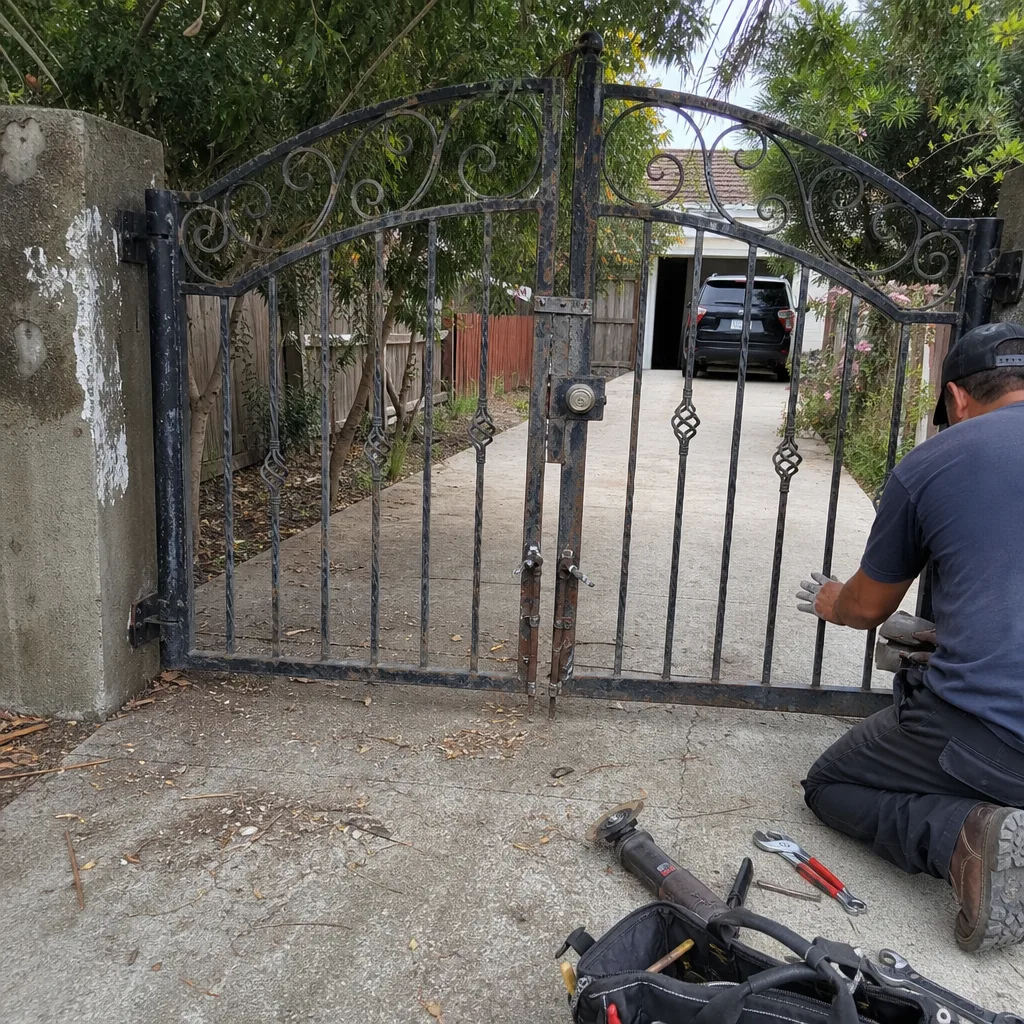 Before
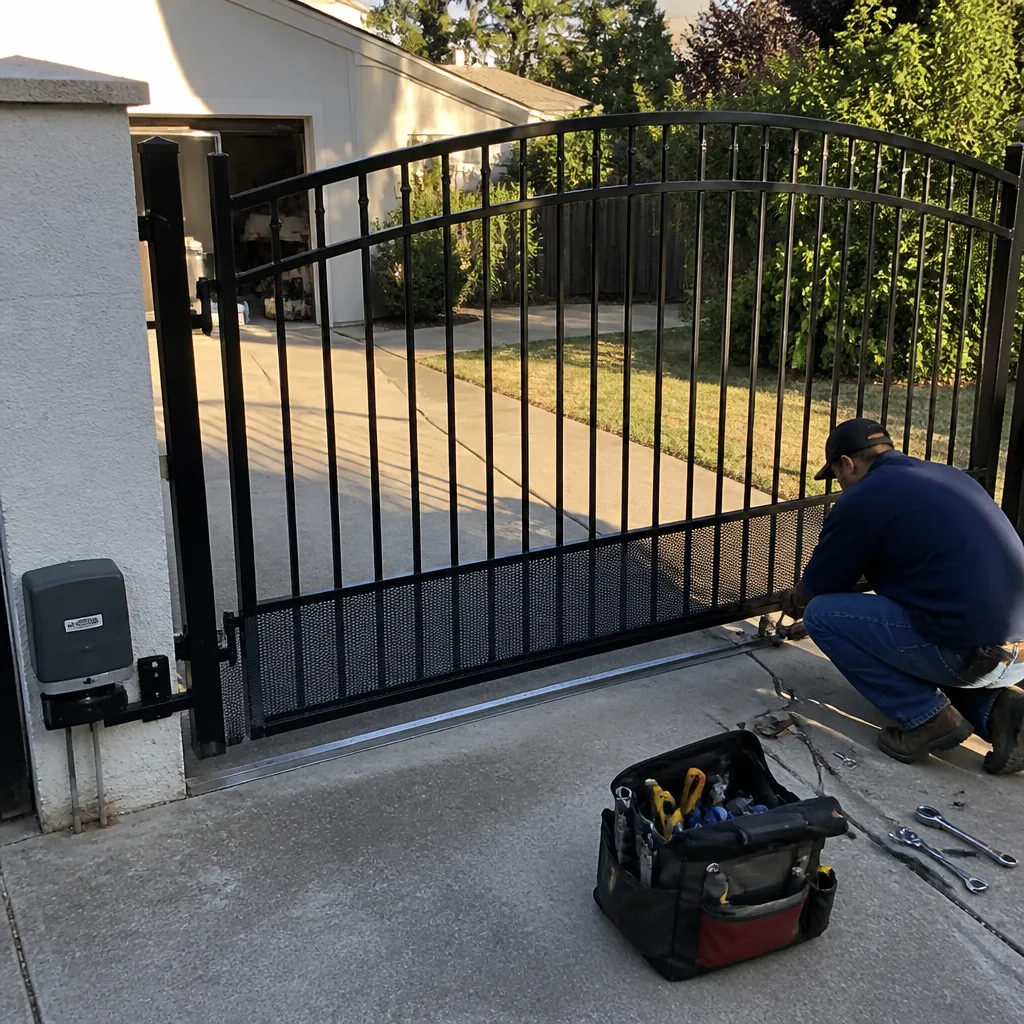 After
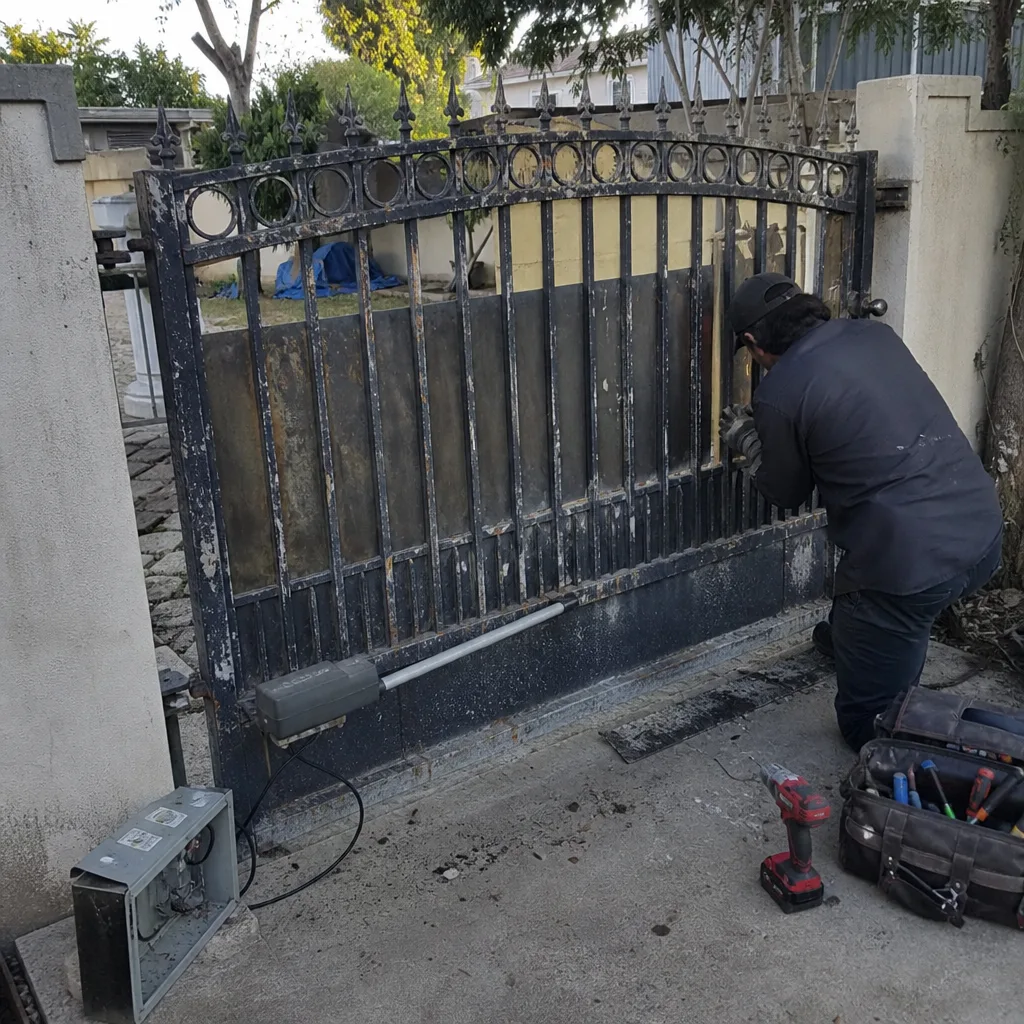 Before
 After
 Before
 After