
Last updated November 2, 2026
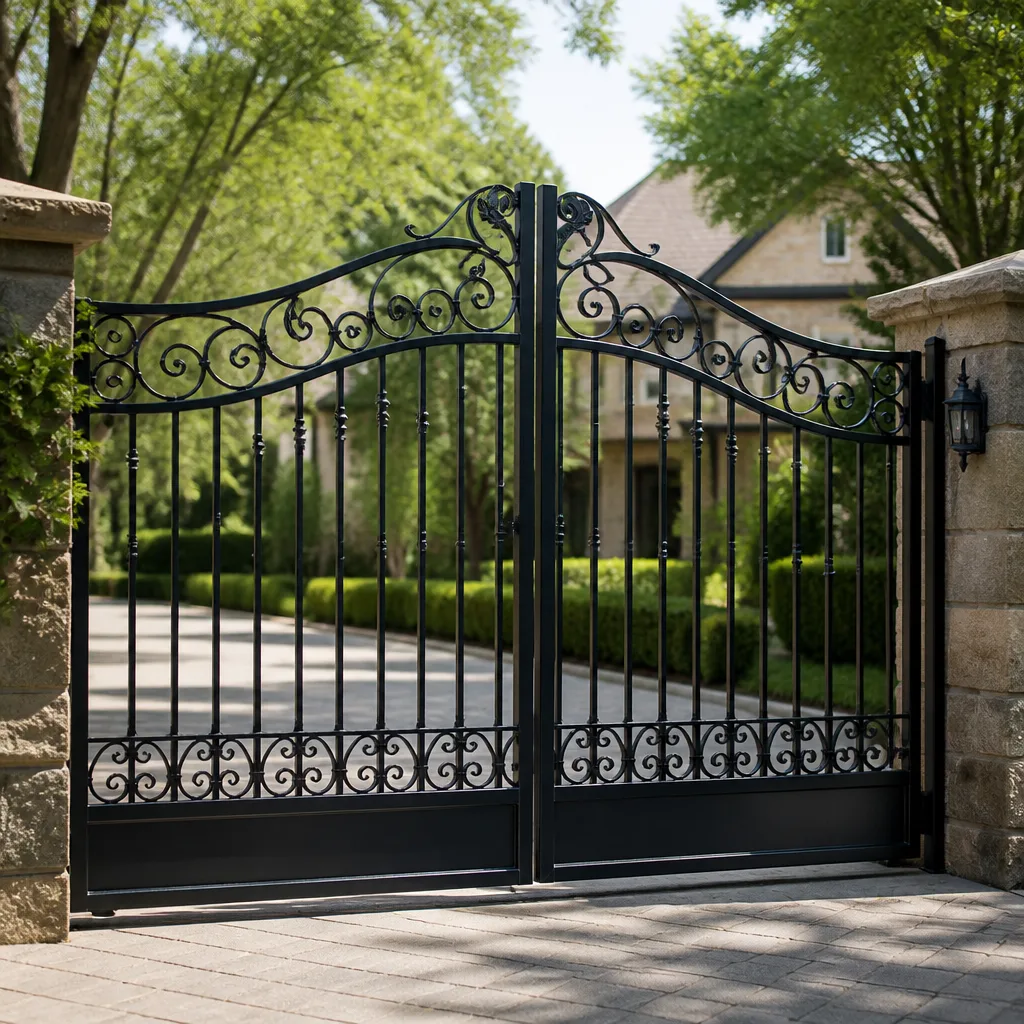 Wrought iron
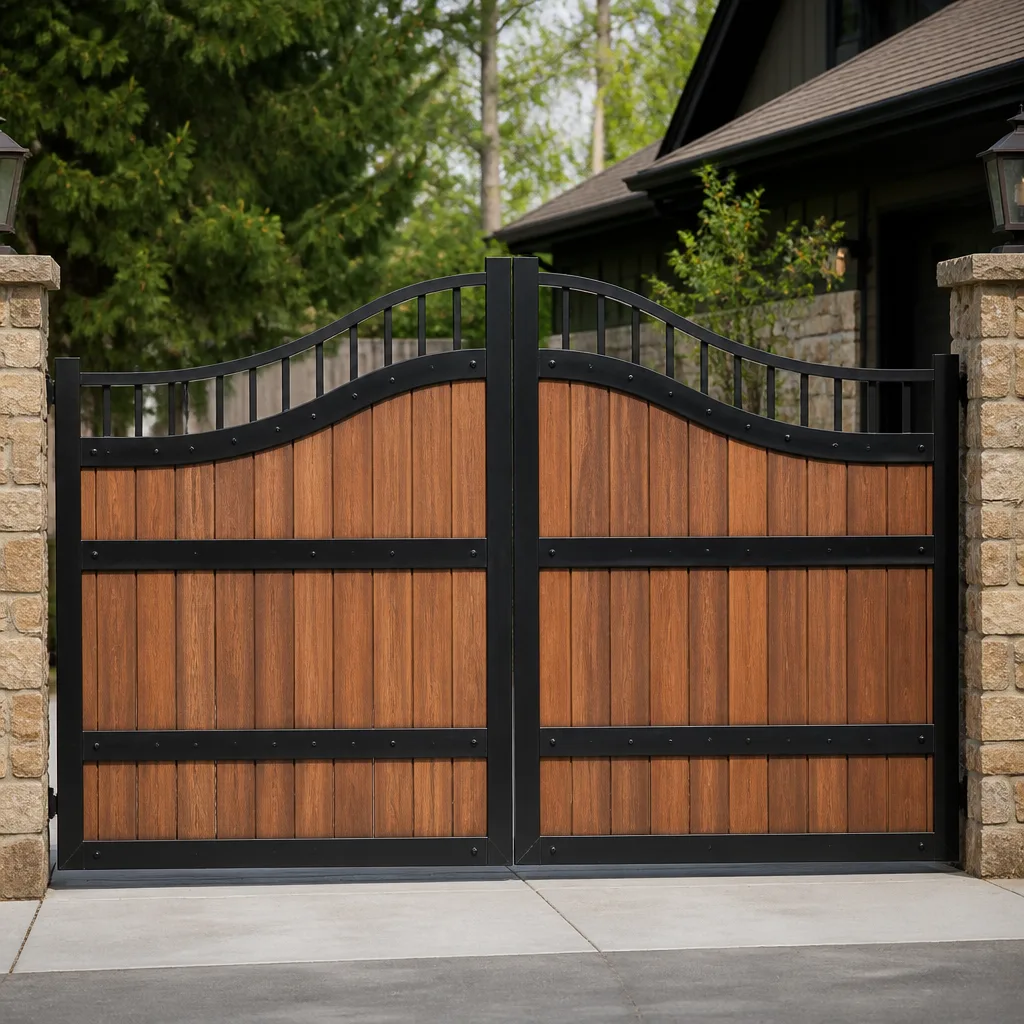 Wood & steel frame
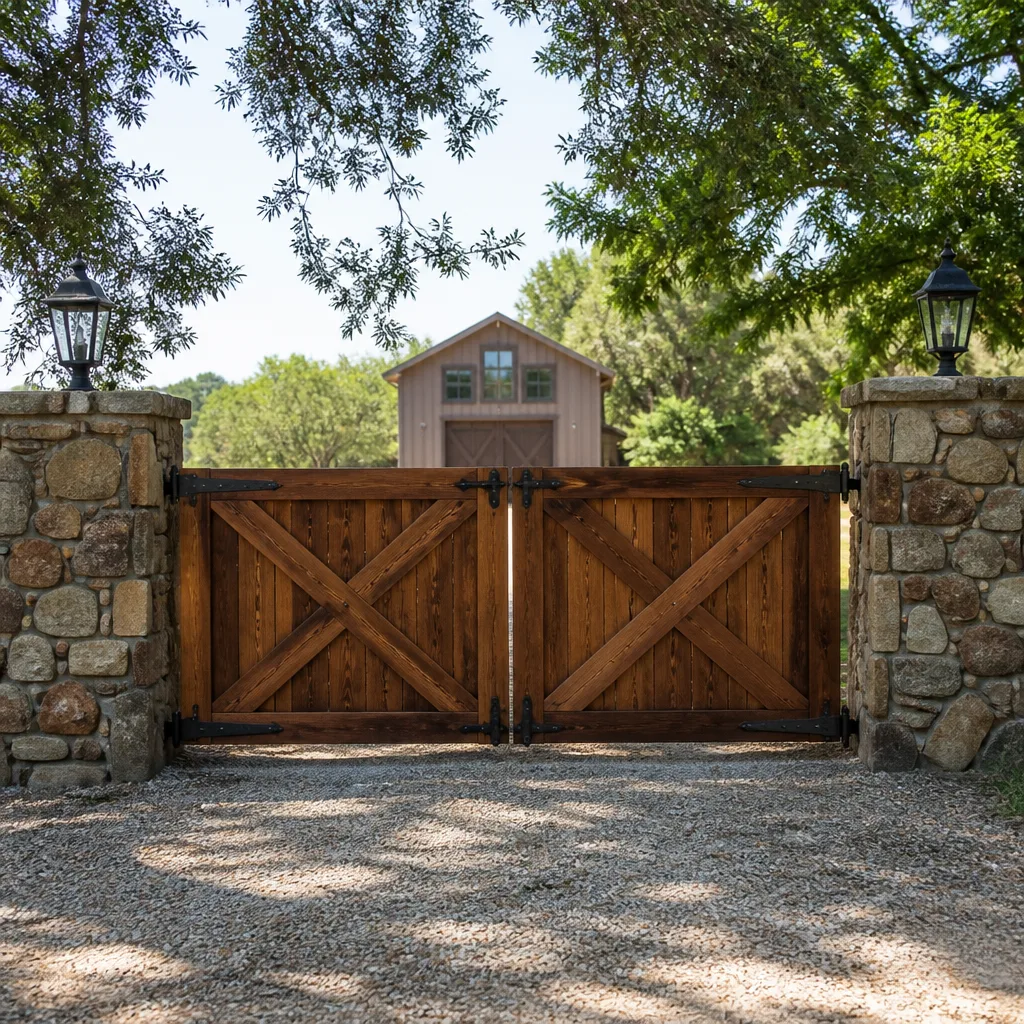 Farm & ranch
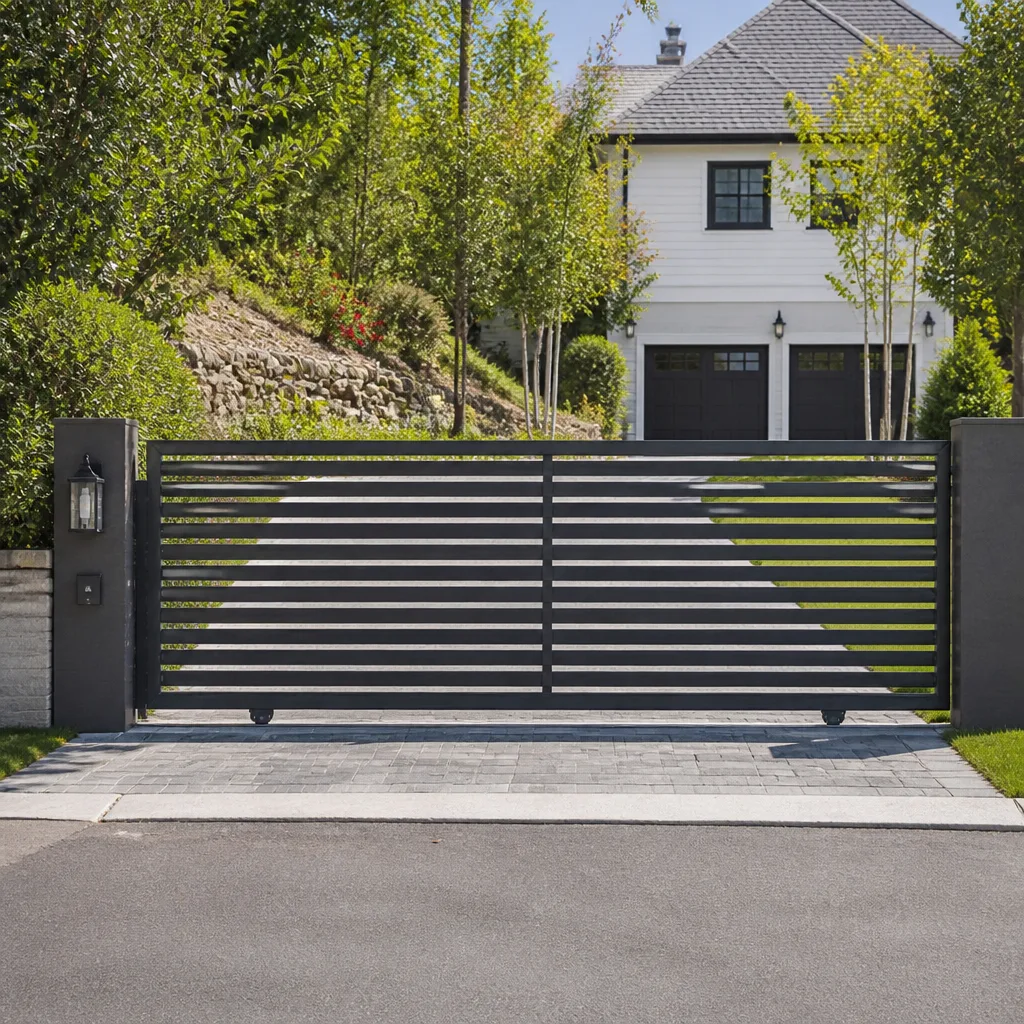 Sliding driveway gates
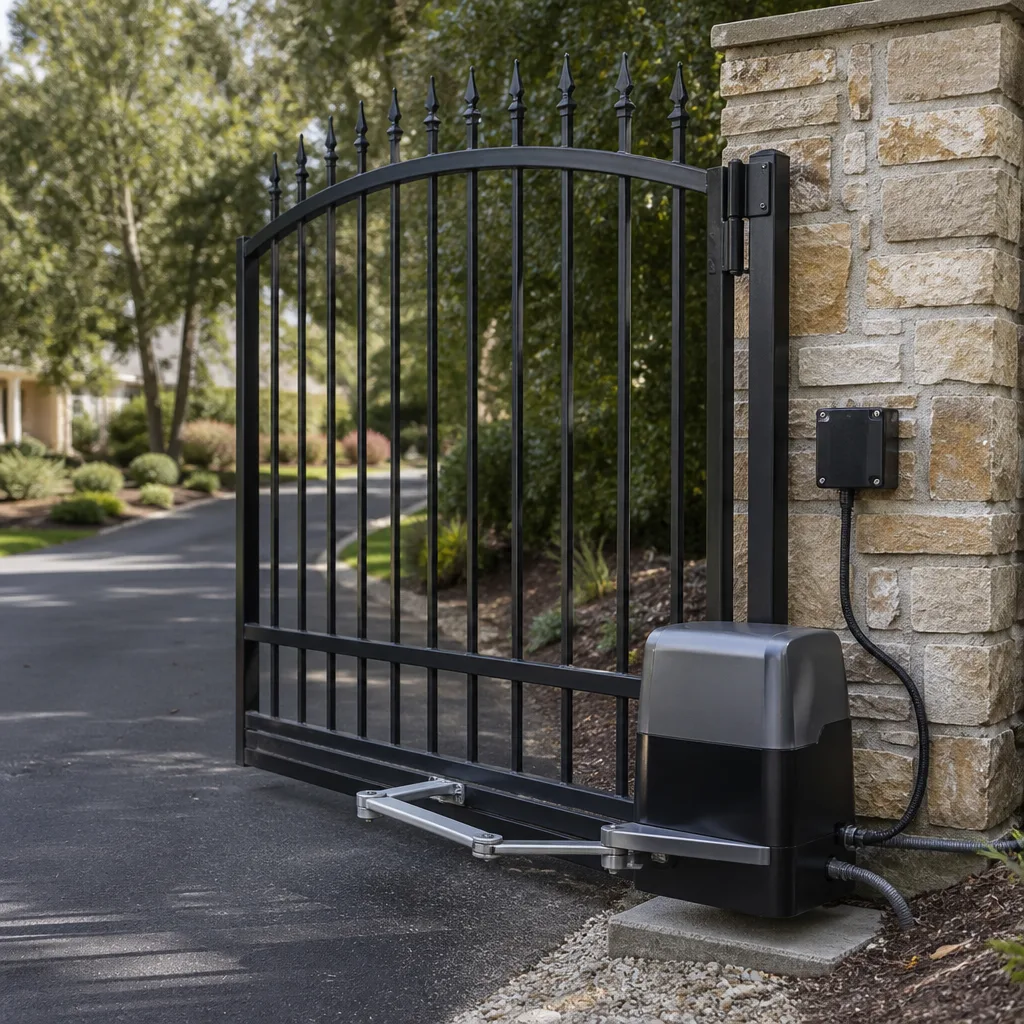 LiftMaster operators
Free on-site gate assessment - hinges, posts, and your LiftMaster or Nice gate operator checked before anything is quoted
The assessment is free and the quote is the invoice.
Get your free estimateDIY vs Professional Gate Repair: The Del Paso Park Homeowner’s Decision Guide
Replacing a gate remote or cleaning a sensor lens is legitimate DIY territory. Adjusting limit switches on a high-torque swing operator without understanding current draw is how a $200 repair becomes a $900 motor replacement. Most Del Paso Park homeowners don’t lack mechanical skill. What they lack is the specific diagnostic knowledge that separates a safe fix from a costly mistake. This guide draws a clear line between the two, task by task, so you can decide with confidence instead of guesswork.
Styles & brands we work with
- Wrought iron
- Wood & steel frame
- Farm & ranch
- Sliding driveway gates
- LiftMaster operators
Quick Answer
Del Paso Park homeowners can safely handle about 15% of gate repairs themselves: remotes, battery swaps, sensor cleaning, and basic track clearing. Everything involving motors, control boards, limit switches, safety sensors, or hinge geometry should go to a Gate Repair professional, because those repairs carry real risk of compounding damage, warranty voiding, or UL 325 safety-compliance violations.
Table of Contents
- What Homeowners Can Safely Do Themselves
- What Requires a Technician, and Why
- How DIY Control Board Replacements Void Warranties
- UL 325 Compliance and California Code
- Tools Worth Owning vs. Tools Not Worth Buying
- The Real Cost Differential: DIY vs. Professional for Five Tempting Repairs
- Brand-Specific Considerations: FAAC, BFT, Linear, and Viking
- Common Mistakes to Avoid
- When to Call a Professional
- Frequently Asked Questions
- The Bottom Line
What Homeowners Can Safely Do Themselves
The DIY zone is narrower than most online guides suggest. We’re not saying that to protect our trade. We’re saying it because a gate operator is a motorized system that moves a heavy object on a regular cycle, and certain failures in that system don’t announce themselves until someone gets hurt or something breaks expensively.
Here’s what we tell Del Paso Park homeowners they can handle without a technician:
- Remote control battery replacement. Open the case, swap the battery, test. If the remote still doesn’t work, the issue is pairing or receiver frequency, not the battery.
- Cleaning photoelectric sensor lenses. A soft dry cloth on both lens faces clears most false obstacle detections. Dust from the dry Sacramento summers coats sensors faster than people realize.
- Clearing debris from the gate track. Leaves, gravel, and the occasional tumbleweed from the open fields around Del Paso Park find their way into slide-gate tracks constantly. A stiff brush and a few minutes clears them.
- Lubricating hinges and pivot points. A quality lithium or silicone lubricant on the hinge pin and pivot areas reduces strain on the motor. Do this twice a year.
- Visual inspection of wheels, hinges, and mounting bolts. You’re looking for metal fatigue, rust, loose hardware, or anything out of alignment. You’re not adjusting anything.
The common thread: these tasks involve no wiring, no disassembly, no torque adjustment, and no contact with energized components. If a task requires removing a cover plate that exposes a control board, it’s crossed into professional territory.
What Requires a Technician, and Why
The “why” matters more than the “what.” Understanding the failure mode behind each restriction helps you evaluate what you’re risking when a neighbor or online video says something is easy.
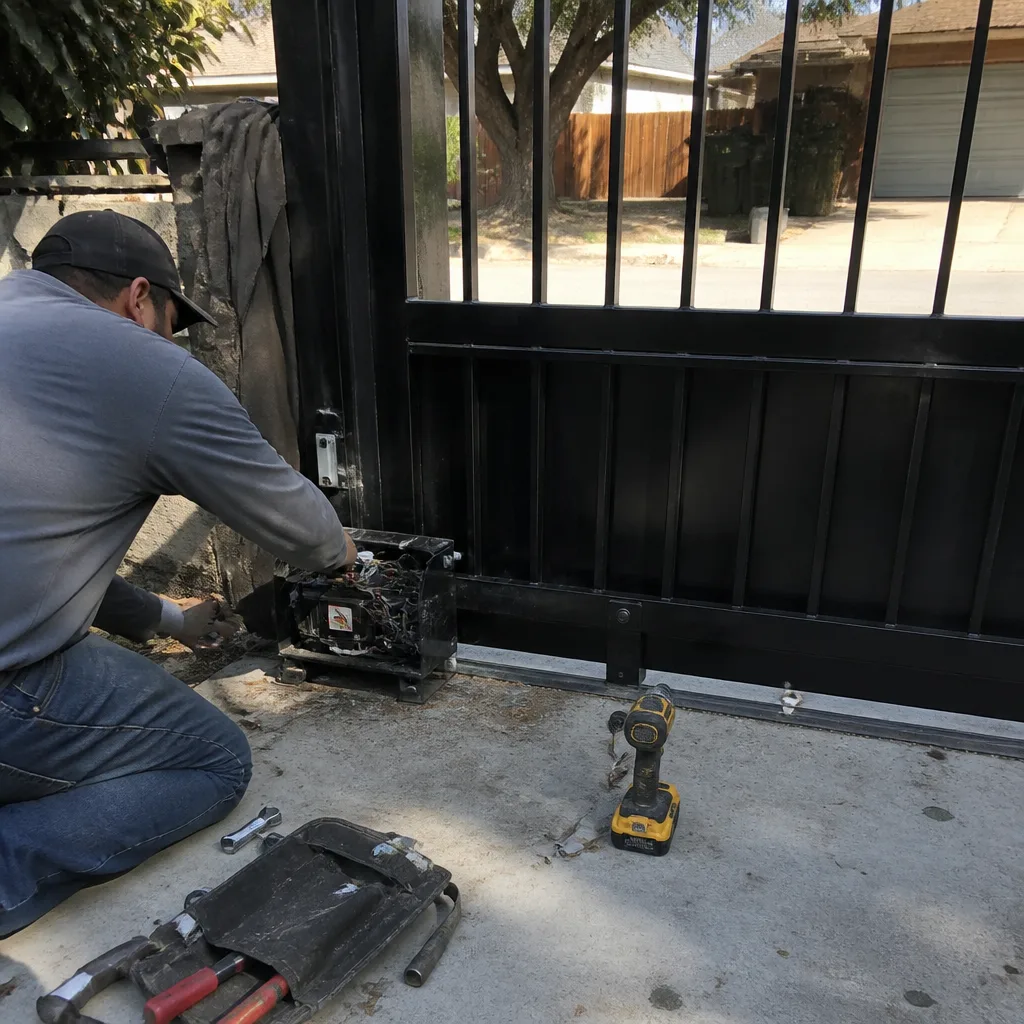
- Limit switch adjustment. A limit switch tells the operator when to stop the gate. Set it wrong and the gate slams into the end post or overextends the arm. On high-torque swing operators, that overtravel can strip the gearbox or bend the arm. We’ve replaced motors in Del Paso Park where the gate had been adjusted a half-inch too far and ground itself down over a month.
- Motor or gearbox replacement. This requires matching torque specs, understanding current draw, and aligning output shafts to the gate’s geometry. A binding gate can kill a new motor within weeks if the underlying friction isn’t addressed first.
- Control board replacement or repair. Beyond the electrical work, modern operators have firmware-level pairing and programming. We’ll cover warranty implications in the next section.
- Safety sensor alignment or replacement. UL 325 mandates specific installation heights and test procedures. In California, certain safety-system adjustments must be made by a qualified person. This is a code issue, not a skill level issue.
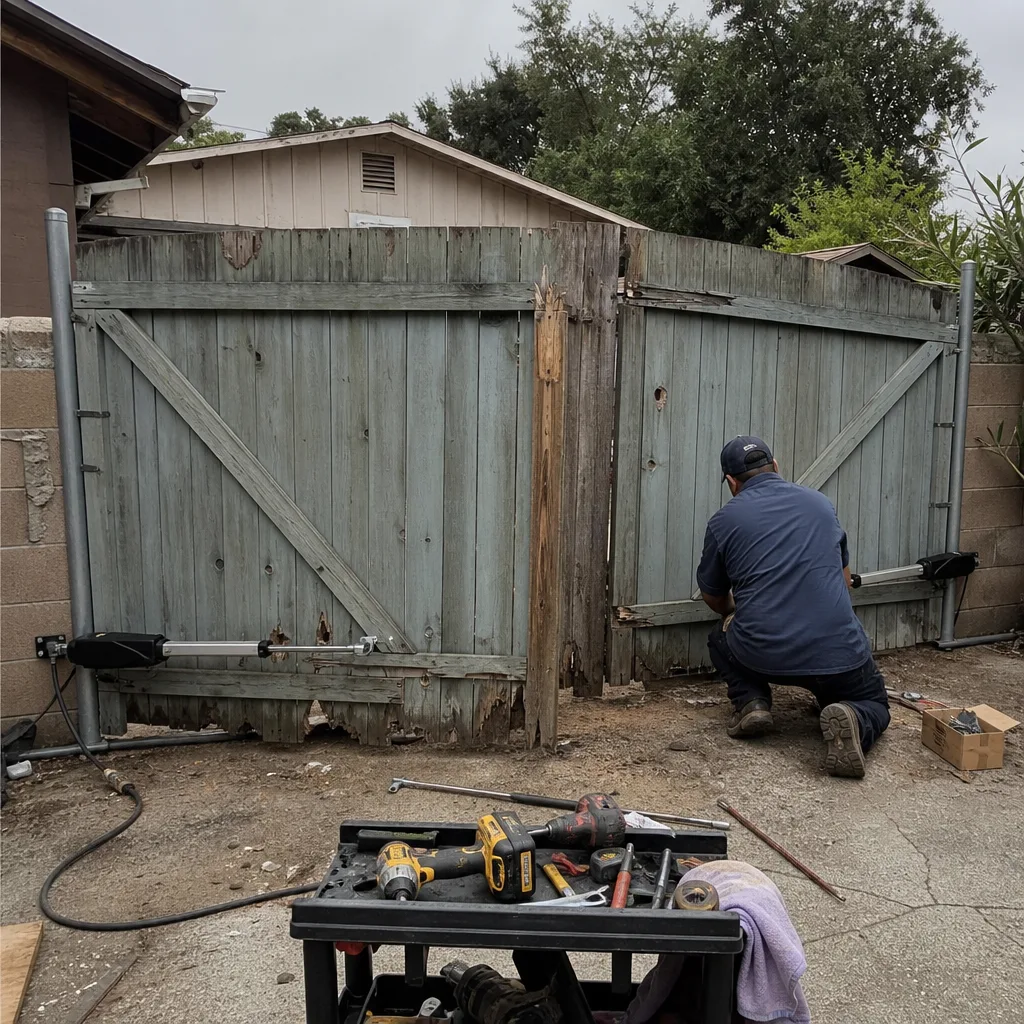
- Hinge replacement on heavy gates. A welded steel gate can weigh 400 to 800 pounds. Removing a hinge without proper support causes the gate to drop, and sudden gate drops break arms, destroy operators, and injure people.
- Any repair involving exposed wiring or capacitor discharge. Gate operators contain capacitors that hold a charge even after power is disconnected. That charge can deliver a bad shock.
How DIY Control Board Replacements Void Warranties
A homeowner buying a replacement control board online and installing it themselves typically does not invalidate the board manufacturer’s warranty. That’s a common misconception. What it does void, often silently, is the operator system warranty from the gate’s original installer or the operator manufacturer when the board is identified as an unauthorized part.
Here’s the mechanism that surprises people. Many modern operators, including Linear and select Viking models, run firmware that checks board serial numbers against the registered installation. When a board is swapped without re-registration through a dealer portal, the operator’s on-board diagnostics flag the unit. If a warranty claim follows, the manufacturer’s system shows an unregistered board change, and the claim is denied under the unauthorized-modification clause.
This isn’t the manufacturer being punitive. It’s their way of ensuring that installers who understand torque settings, power ratings, and limit calibrations are the ones touching the equipment. A board purchased online may also be a superseded revision that’s incompatible with older actuators on your specific gate. We’ve had Del Paso Park customers bring us operators where a DIY board swap worked for two weeks, then failed because the new board’s motor-drive profile didn’t match the original motor’s power draw. The board cost them $180. The subsequent motor failure cost $600.
UL 325 Compliance and California Code
UL 325 is the national safety standard covering automatic gate operators. It’s not a suggestion. It’s the basis for product liability and installer responsibility in California. Under UL 325, gate operators must include specific safety devices: photoelectric sensors, reversing edges, or both, depending on the gate type and application.
The portion of the standard that affects DIY decisions directly is the requirement that installations and safety-system adjustments be performed by a “qualified person.” California has adopted this into state code, and it’s the language insurance companies look for when a gate-related injury claim is filed. A homeowner who adjusts sensor height to stop a false trigger and then a visitor gets caught by the gate has substantially more liability exposure than a homeowner who left the safety system alone and called a technician.
The Del Paso Park market has a mix of residential swing gates on older properties and newer slide gates on larger lots. Slide gates carry different entrapment concerns than swing gates, and the sensor spacing requirements differ. What works on one won’t pass on the other. That’s why we never recommend copying settings from a neighbor’s gate, even a directly adjacent property. The geometry, motor torque, and operator brand all change the correct calibration.
For any gate work that touches wiring, sensors, boards, or motors, use a specialist. This is a core part of what we do at Gate Repair Del Paso Park home services, and it’s the reason we exist as a dedicated gate trade rather than a general contractor.
Tools Worth Owning vs. Tools Not Worth Buying
Most Del Paso Park homeowners already own everything needed for legitimate DIY gate maintenance. The moment a task requires a specialized tool, the economics shift: a tool you’ll use once costs more than the service call, and you still won’t have the diagnostic context to use it correctly.
Tools worth owning (under $40 combined):
- Lithium grease or silicone spray. For hinges, pivots, and slide tracks. Don’t use WD-40; it’s a cleaner, not a lubricant, and it attracts dust.
- A set of hex and Torx keys. Most gate remote battery compartments and some sensor housings use these fasteners.
- A multimeter. A basic $25 unit is enough to test battery voltage and confirm power at the outlet feeding the operator. That’s the limit of what you should do with it.
- A stiff nylon brush. For track cleaning.
- A level. If a gate post looks off, confirming with a level before calling a pro gives us useful information on the phone.
Tools not worth buying for one repair:
- Torque wrenches for hinge work. If you need one, the job has already crossed the line.
- Operator-specific programming dongles. Many FAAC and BFT systems require brand-specific diagnostic interfaces that cost $150 to $400 and only work with that manufacturer’s boards.
- Circuit board test jigs. Useless without the diagnostic protocols behind them.
- High-tension spring tools. If your gate has counterbalance springs, that’s a professional-only component. Full stop.
The Real Cost Differential: DIY vs. Professional for Five Tempting Repairs
The DIY cost looks cheaper on the front end almost every time. The honest comparison includes failure-scenario costs, and that’s where the math changes in favor of a technician more often than people expect. For a deeper dive, see our Gate Repair Cost Breakdown: The Del Paso Park Homeowner’s Reference for 2026. Here are the five repairs Del Paso Park homeowners most often attempt themselves, with real numbers from our service calls.
1. Remote control replacement or pairing. DIY cost: $25 to $60 for a compatible remote. If the pairing protocol requires a learn button sequence that’s model-specific and the remote won’t sync, the remote is often non-returnable. Professional cost: $75 to $120 including the remote and pairing. Failure scenario: buying three wrong remotes over a month costs more than one service call.
2. Safety sensor cleaning or replacement. DIY cleaning cost: $0. DIY replacement cost: $40 to $90 for sensor parts. Professional cost: $110 to $180 for sensor replacement and recalibration. Failure scenario: a misaligned sensor leaves a gap in coverage. If the gate pins someone, liability exposure far exceeds the $100 saved.
3. Control board replacement. DIY cost: $150 to $350 for the board, plus shipping and potential programming hardware. Professional cost: $350 to $600 installed and programmed. Failure scenario: board revision incompatibility burns out a motor. Total cost: the board you bought plus $600 to $900 for the motor replacement. The $200 saved becomes a $400 loss.
4. Limit switch adjustment. DIY cost: $0. Professional cost: $100 to $180. Failure scenario: overtravel strips the gearbox. Gearbox replacement runs $300 to $700 on many residential operators.
5. Slide gate wheel replacement. DIY cost: $30 to $80 for wheels. Professional cost: $150 to $250 including alignment. Failure scenario: incorrect wheel height puts uneven load on the track, the motor works harder, and the operator fails prematurely. Motor replacement starts around $450.
The common theme: the savings from DIY exist only when the repair succeeds on the first attempt and no secondary damage occurs. On professional repairs, the price is quoted and agreed before any work starts, so there’s no surprise invoice. That’s a meaningful difference when comparing out-the-door costs.
Brand-Specific Considerations: FAAC, BFT, Linear, and Viking
Not all gate operators are created equal, and the DIY calculus changes depending on what’s installed on your property. We work on nine major gate-operator brands across Del Paso Park, and four of them illustrate why brand knowledge matters.
FAAC systems are common on higher-end residential and light commercial gates in the Del Paso Park area. Their hydraulic operators are precise but unforgiving of amateur calibration. The pressure relief settings on a FAAC hydraulic unit are set at the factory and should rarely be touched. We see homeowners crank them to force a binding gate open, then wonder why the pump whines and the system fails.
BFT operators run on proprietary control logic. Many BFT boards require a specific programming sequence that isn’t published in the consumer manual. A homeowner can physically install a BFT board correctly and still end up with a non-functional gate because the board needs dealer-level configuration. That’s a phone call away if you work with a shop that knows the brand. It’s a brick wall if you bought the board from a random online seller.
Linear is one of the most common residential brands in the Sacramento area, and their warranty department is strict about unauthorized board changes. We covered that in the warranty section, but it bears repeating: a Linear control board swapped without re-registration through a dealer portal is a warranty claim waiting to be denied.
Viking systems appear frequently on gated driveways in the older neighborhoods around Del Paso Park. Many Viking operators still in service are older units with discontinued control boards. A DIY repair on a Viking often starts with buying a used board on eBay, and used boards come with their own failure history. A technician who knows Viking can tell you whether the board is even repairable before you spend money.
When a gate system needs work, the repair-first approach matters. We fix what’s there before recommending a replacement, because replacing a functioning operator due to a fixable board issue doesn’t serve anyone. That’s the difference between working with a specialist and guessing with a parts catalog. For homeowners elsewhere in the area, our Gate Repair in Robla service covers the same brand range.
Common Mistakes to Avoid
- Lubricating the motor itself. Gate motors are sealed units. Spraying lubricant into motor vents introduces contaminants that shorten motor life. If the motor is noisy, the problem is usually mechanical load or bearing wear, not friction inside the motor.
- Using WD-40 on gate tracks. It cleans and then attracts more dirt than you removed. Use a dry silicone or PTFE spray instead, and wipe the track clean first.
- Forcing a gate that suddenly binds. If your gate was moving fine and now struggles, forcing it open manually or cycling the motor repeatedly can turn a minor alignment issue into a ruined gearbox. The gate is telling you something. Listen.
- Bypassing a photo eye that keeps tripping. Sometimes a homeowner zips the sensor leads together to “fix” a false trigger. That disables the entrapment protection, creates a serious hazard, and violates UL 325. It also converts a simple sensor replacement into a liability problem.
- Buying the cheapest replacement remote online. Universal remotes don’t work with all operator frequencies and security protocols, especially newer rolling-code systems. Match the exact model to the operator, not “universal fit.”
- Ignoring gate-post lean. A leaning post changes gate geometry and loads the hinges unevenly. Post repair is a professional job, but early detection by a homeowner saves real money. If your gate drags at one end or the gap at the latch is widening, note it and call.
When to Call a Professional
Call a professional when the repair involves the motor, control board, limit switches, safety sensors, hinges on a heavy gate, or any energized component. Also call when your gate makes a new noise, moves slower than it used to, reverses at the wrong point, or trips the breaker repeatedly. These are early-warning signs that specific diagnostics catch before a small problem becomes a component death. Gate Repair Del Paso Park offers free estimates in Del Paso Park. Call (833) 620-4636 and a gate specialist will come out, diagnose the issue, and quote a fixed price before any work starts.
Frequently Asked Questions
Yes. Remote battery replacement is one of the safest DIY tasks in gate maintenance. Open the remote case, swap the battery, and test. If it still doesn’t work, the issue is likely pairing or receiver input, not the battery. Those require a technician.
Control board replacement gone wrong. A mismatched or incorrectly programmed board can burn out a gate motor, turning a $400 job into a $1,000 repair. We cover this and other urgent scenarios in our Gate Repair Emergency Preparedness Guide for Del Paso Park Homes, and we see this several times a year around Del Paso Park.
Most Del Paso Park gate repairs run between $120 and $500 depending on the component. Sensor replacements and limit adjustments sit on the low end. Board replacements and motor work sit on the high end. Estimates are free, and the price is quoted before work begins. Call (833) 620-4636 for a specific number on your gate.
No permit is required for repairing an existing gate operator or components. New gate installation may trigger local permitting requirements depending on height, location, and whether the gate faces a public right-of-way. Our Gate Installation in Robla guide covers when installation permits apply.
You can physically do it, but the UL 325 compliance and programming requirements make it a high-risk project for a homeowner. A wrong sensor height or missing edge protection creates a serious safety hazard. New operator installation should be done by a qualified technician.
An electrician handles the power feed to the operator. A gate specialist handles everything from the operator back: motors, boards, sensors, hinges, limit switches, and the physical gate itself. For electric gate issues, you want an Electric Gate Repair specialist, not a general electrician. Call (833) 620-4636 and you’ll get someone who works on gates all day, every day.
The Bottom Line
The DIY-versus-professional question for gate repair comes down to risk, not capability. For more guides & resources on making that call, visit our blog. Clean your sensors, swap your remote batteries, clear your tracks, and lubricate your hinges. Stop there. The moment a repair touches anything energized, anything programmed, or anything that moves a heavy gate through its arc, call a specialist who works on your brand, not just gates in general. In Del Paso Park, that means a shop that knows FAAC, BFT, Linear, Viking, and the rest. A free estimate costs nothing. A fried motor from a bad board swap costs hundreds. The decision is easier than it looks.
Written by the team at Gate Repair Del Paso Park, serving Del Paso Park since 2012.
See the difference
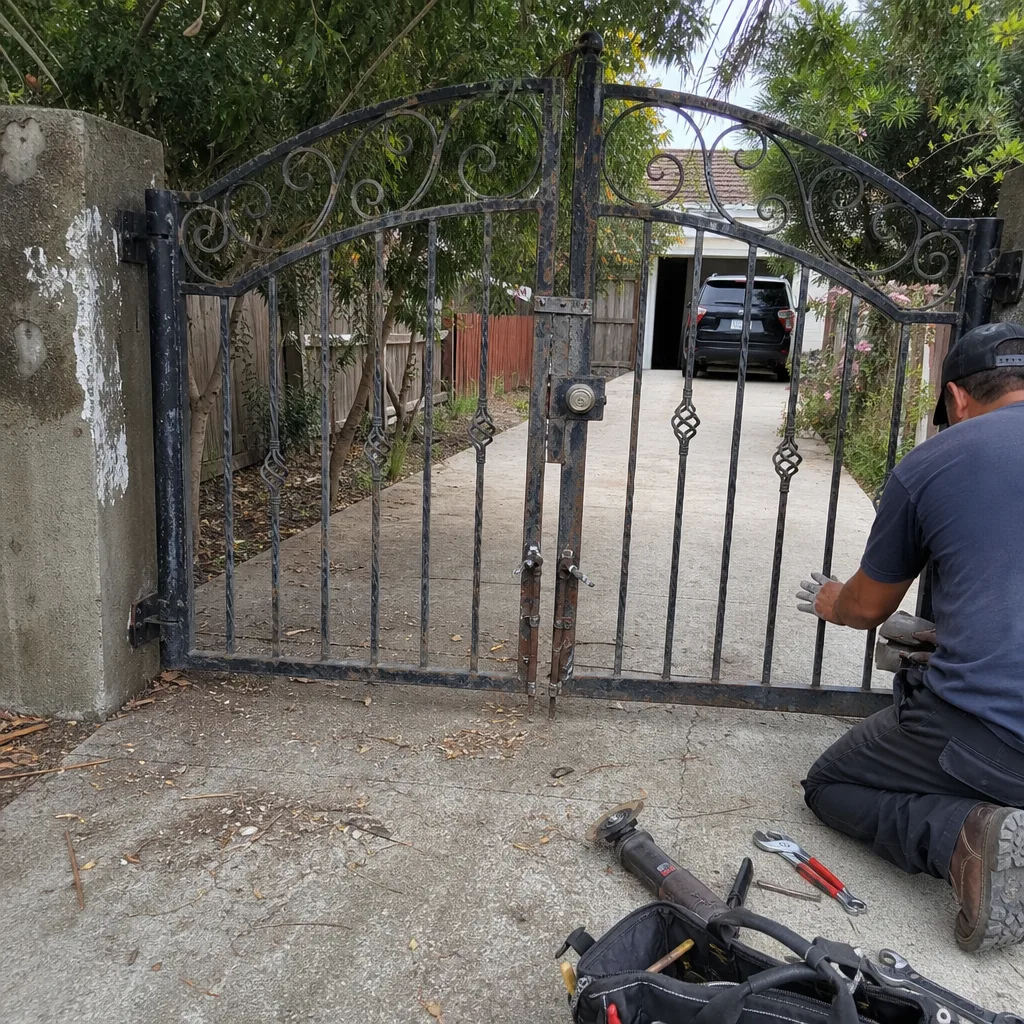 Before
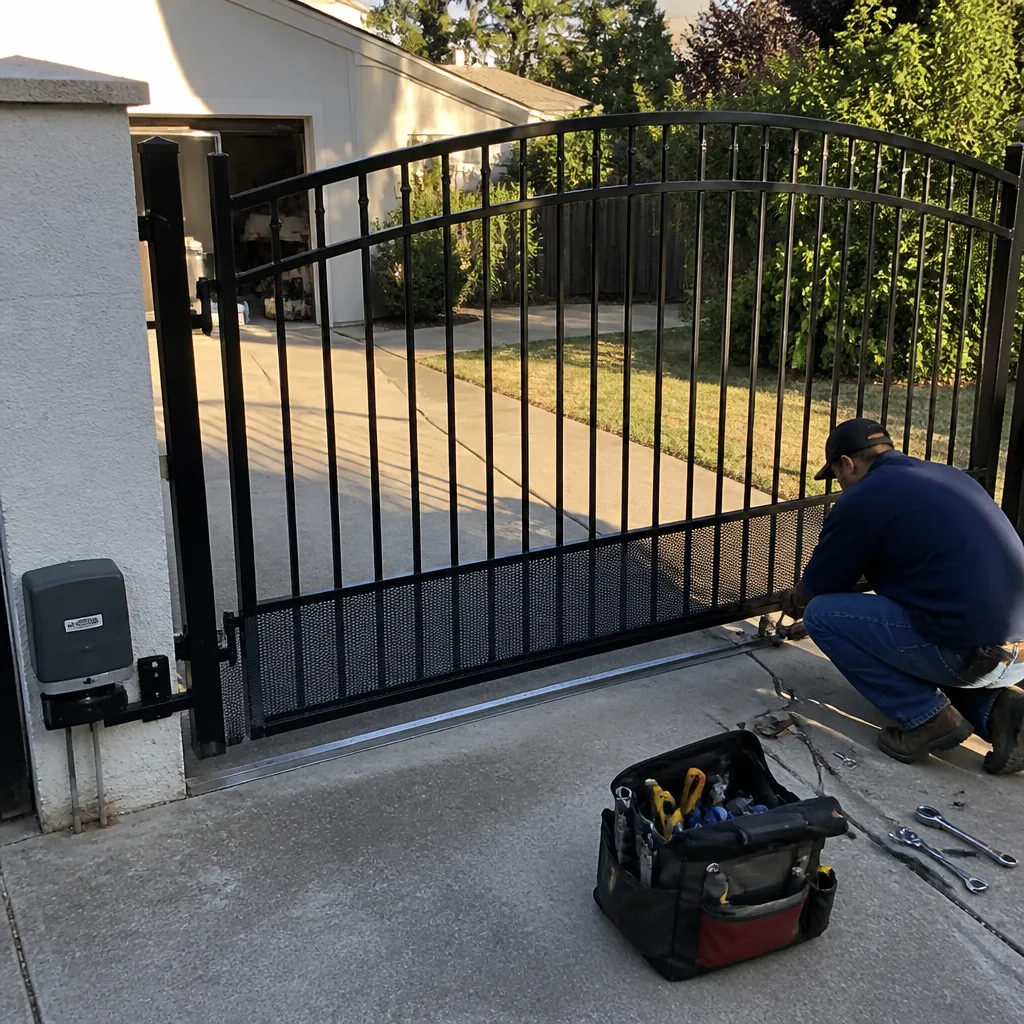 After
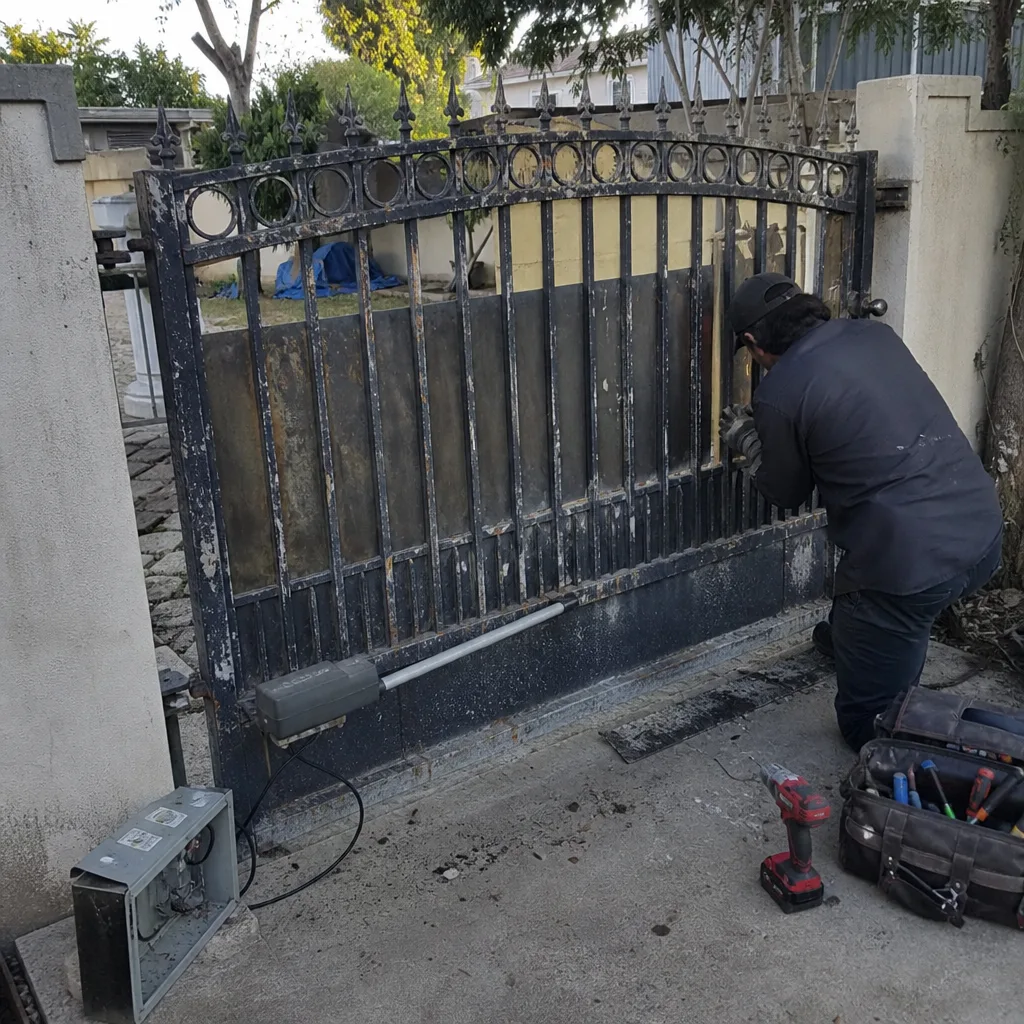 Before
 After
 Before
 After