
Last updated November 2, 2026
 Wrought iron
 Wood & steel frame
 Farm & ranch
 Sliding driveway gates
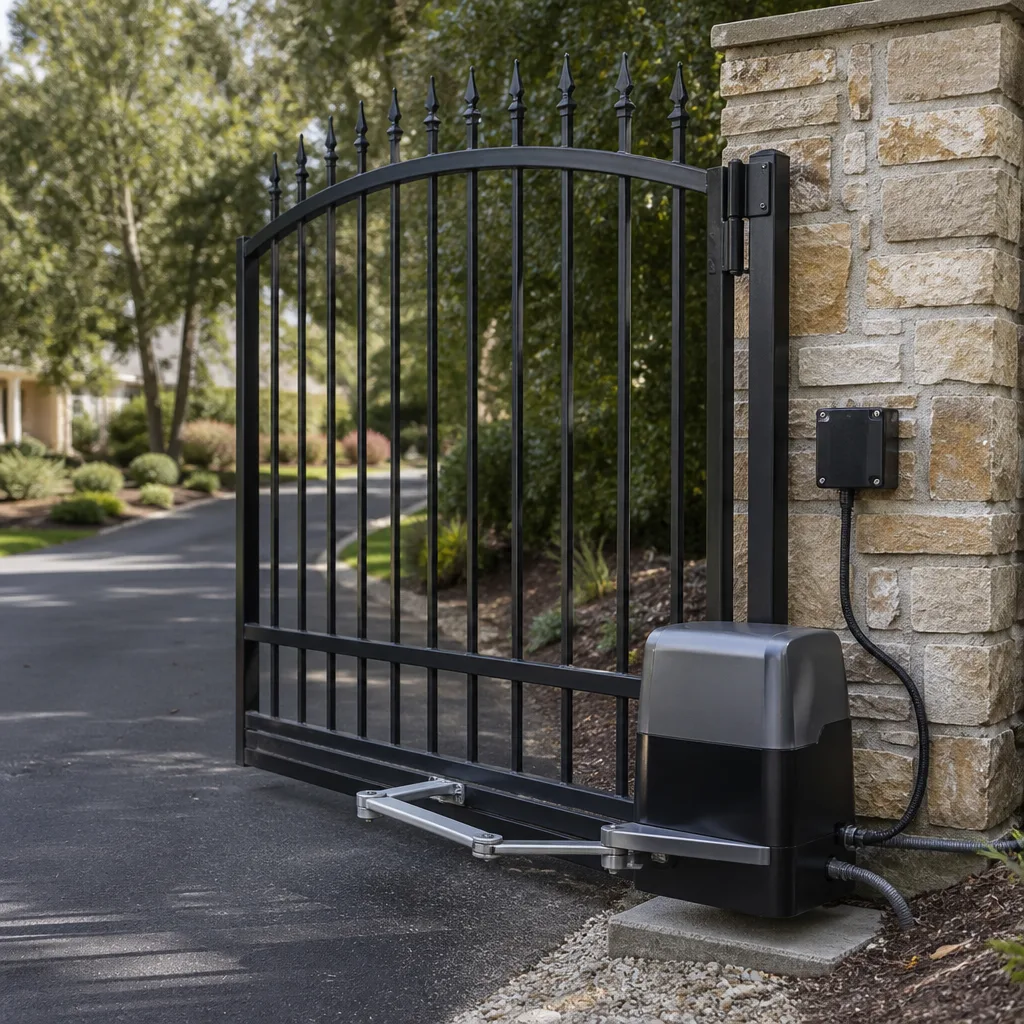 LiftMaster operators
Free on-site gate assessment - hinges, posts, and your LiftMaster or Nice gate operator checked before anything is quoted
The assessment is free and the quote is the invoice.
Get your free estimateGate Repair Warning Signs: A Del Paso Park Homeowner’s Reference Guide
Most gate failures in Del Paso Park don’t happen without warning. They announce themselves days or weeks in advance through sounds, hesitations, and small movements that get ignored because the gate still opens and closes. What we’ve learned from hundreds of service calls across Sacramento is that a homeowner who can identify the difference between a failing hinge and a failing motor will spend less on diagnostics, avoid being sold unnecessary parts, and keep a minor issue from becoming a full operator replacement. This guide maps each warning sign to the component actually failing, so when you call us, you can describe the problem in terms that shorten the repair.
Styles & brands we work with
- Wrought iron
- Wood & steel frame
- Farm & ranch
- Sliding driveway gates
- LiftMaster operators
Quick Answer
Gate repair warning signs in Del Paso Park fall into four categories: grinding or scraping sounds from the mechanical hardware, hesitation or delayed response from the operator or control board, partial movement or reversal from the safety system, and intermittent failure from the power supply. For professional help with any of these issues, our Gate Repair services cover all component types. Each symptom points to a specific component. Recognizing which one is failing tells you whether you’re looking at a quick fix or a full operator replacement.
Table of Contents
- The Symptom-to-Cause Map: What Your Gate Is Actually Telling You
- What Different Gate Sounds Mean in Del Paso Park
- Hesitation and Delayed Response: Control Board and Sensor Signals
- Partial Movement and Random Reversal: The Safety System
- Power Supply Warnings: When the Gate Isn’t Getting Clean Voltage
- Hinges vs. Motor: Two Distinct Sounds, Two Different Repairs
- How to Document and Describe Gate Symptoms to a Technician
- Which Warning Signs Are Urgent and Which Can Wait
- Common Mistakes to Avoid
- When to Call a Professional
- Frequently Asked Questions
- The Bottom Line
The Symptom-to-Cause Map: What Your Gate Is Actually Telling You
A gate is a simple machine with four distinct systems working together: the mechanical hardware (hinges, wheels, track, chain), the operator (motor and gearbox), the control system (board, remote receiver, limit switches), and the safety system (photo eyes, edges, loop detectors). When something fails, the symptom almost always points to one of these systems, not all four. The trick is knowing which symptom maps to which system.
In Del Paso Park, where summer heat cycles and winter moisture put different stresses on gate components than coastal California, certain failures show up more often than others. We see expansion-related binding in the summer on wrought-iron gates along Del Paso Boulevard, and moisture-related sensor faults in the winter months. Understanding your gate’s language means you’re not guessing when a technician asks what’s wrong.
Here’s the map we use when a homeowner in Del Paso Park calls us with a symptom:
- Grinding sound while moving: Mechanical hardware. Usually hinges, rollers, or the chain. Rarely the motor itself.
- Gate hesitates before moving after pressing remote: Control board or safety sensor. The operator is receiving a signal but waiting for a condition to clear.
- Gate starts moving, then stops and reverses: Safety system. A photo eye, edge sensor, or loop detector is reporting an obstruction.
- Gate moves slower than it used to: Operator or power supply. A motor drawing insufficient voltage will slow down before it fails completely.
- Gate opens but won’t close (or vice versa): Limit switch or control board. The operator is not receiving the command to change direction.
- Remote works intermittently from the same distance: Receiver or antenna. Not the motor, not the hinges, not the power supply.
- Gate stops halfway and won’t move: Power supply or a tripped internal breaker. The operator lost voltage mid-cycle.
What this map does is eliminate wasted diagnostic time. If your gate is grinding, no technician should open the control board first. If your remote works intermittently, no one should be replacing hinges. Del Paso Park homeowners who can say “it grinds when it moves” rather than “it’s broken” get faster, more accurate repairs.
Each of the four systems has its own failure signature. Once you can place your symptom in the right bucket, you’re 80% of the way to a correct diagnosis before any tools come out. The sections below break down each warning sign category in detail, including what we typically find in Del Paso Park residential gates and what the repair actually involves. For a broader look at what we service, see our Gate Repair Del Paso Park home page.
What Different Gate Sounds Mean in Del Paso Park
Sounds are the most reliable early warning system a gate has. Metal grinding against metal is never normal, and it never fixes itself. The specific quality of the sound tells you which component is wearing, and in our experience in Del Paso Park, most of these sounds start weeks before the gate actually stops working.
A sharp metallic screech that happens at specific points in the travel, not the whole way through, is almost always a hinge. The sound occurs when the gate reaches the angle where the worn bearing or dry pin is under maximum load. You’ll hear it at the same spot every time, and it will get louder over weeks. On swing gates in Del Paso Park’s older neighborhoods, we see this frequently on original hinges that have gone 15 years without lubrication.
A low grinding or rumbling that runs the entire length of gate travel is the drive system: the chain, the gearbox, or on sliding gates, the track and roller assembly. This sound exists on every cycle and stays consistent in pitch. If it’s a chain-driven operator, the chain is likely stretched or the sprocket has worn teeth. If it’s a track-driven slide gate, the wheels are binding or the track has debris. We see this often on Del Paso Park properties where leaf litter and irrigation overspray accumulate along the gate run.
A rhythmic clicking timed with the gate’s movement is the chain jumping or a gear tooth missing in the operator’s gearbox. Each click is a skipped engagement. This is a countdown, not a warning: the gate will eventually refuse to move when the gear strips completely.
A hum that continues after the gate stops is the motor still under load or a capacitor failing. If the gate stops moving but the motor keeps humming, the operator thinks the gate is still traveling. That’s a control board issue, not a motor issue. If the hum happens every time the gate reaches its limit, the limit switch is not telling the board to cut power.
What we tell homeowners in Del Paso Park is this: if you can record a 10-second video with audio while the gate operates and send it to your technician, you’ll save a diagnostic trip. We can identify most sounds before we drive out.
Hesitation and Delayed Response: Control Board and Sensor Signals
A gate that hesitates before moving isn’t a battery problem 90% of the time. The operator is plugged into line voltage, and a remote control’s battery is either strong enough to transmit or it’s dead. What hesitation actually signals is that the control board is receiving an intermittent input and waiting to confirm it’s valid. The usual culprit, especially with residential systems from Mighty Mule or Ghost Controls, is a dirty or misaligned safety sensor reporting a phantom obstruction.
Here’s the sequence: you press the remote, the receiver picks up the signal, and the control board checks the safety circuit before sending power to the motor. If a photo eye is dirty, the board sees a “not clear” condition and waits. Then the signal fluctuates, the board sees “clear,” and the gate starts. That delay is the board protecting the system from what it thinks is an obstruction. The fix is cleaning the sensor lenses and confirming alignment, which is a $40 part-clean-and-adjust, not a $300 operator replacement. We routinely see this misdiagnosed as a bad board.
Other forms of hesitation point to different components:
- Hesitation only when cold: A capacitor in the motor start circuit is degrading. On Del Paso Park winter mornings, this shows up as a gate that barely starts, then runs normally after a few seconds.
- Hesitation after power blips: The control board’s internal memory is wiping, and it’s re-reading its limit settings before moving. This is normal for some DoorKing and Elite boards, but repeated occurrence after every blip means the board’s backup battery is failing.
- Hesitation only from one remote: The remote’s battery is low or the remote’s coding is drifting. Not a gate problem at all.
- Hesitation that gets longer over weeks: A failing relay on the control board or a motor winding breaking down. The delay will eventually become a refusal.
The key distinction is whether the hesitation is consistent or intermittent. A consistently slow response usually points to the control board or signal path. An intermittent response points to a sensor, a loose wire, or a remote. For Del Paso Park homeowners, this distinction is the difference between a five-minute sensor cleaning and a board replacement.
If your electric gate is showing hesitation that’s getting worse rather than staying the same, that’s a pattern worth a service call. For more on what electric gate diagnostics involve, see Electric Gate Repair in Robla for the full scope of what we check.
Partial Movement and Random Reversal: The Safety System
A gate that starts moving, stops, and reverses before reaching its limit is almost never a motor problem. The motor did its job: it moved the gate. What stopped the movement was the safety system detecting what it believes is an obstruction. In Del Paso Park, where wind-blown debris and sun glare are common along fence lines, we find that most random-reversal calls trace back to a photo eye alignment or a failing safety edge.
The safety system on a modern automatic gate includes the photo eyes (the small sensors near the ground on either side of the gate path), possibly a contact edge (a pressure-sensitive strip on the leading edge of a slide gate), and on commercial systems, loop detectors buried in the driveway. Any of these can cause reversal, and each leaves a different signature.
Random reversal at the same point every time: The limit switch is set incorrectly, or the track is binding at that spot and the operator’s obstruction detection kicks in. We see this on slide gates in Del Paso Park where the track shifts slightly with soil movement.
Reversal only during certain times of day: Sun glare on the photo eyes. Morning and late afternoon sun at low angles hits the receiver eye and the board reads “obstructed.” The fix is shading the eye or swapping receiver and transmitter positions. No parts needed in most cases.
Reversal after rain or irrigation: Moisture in a safety edge connector or a photo eye housing. The water creates a short the board reads as an obstruction signal. Del Paso Park’s winter rains and summer irrigation schedules make this a seasonal issue.
Reversal with no pattern at all: A failing safety edge or a loose wire in the sensor circuit. The intermittent connection sends random obstruction signals to the board.
The important thing about safety-system warnings is that they’re not false alarms in the way most homeowners think. The board is doing what it’s designed to do: refuse to close on an obstruction. The warning sign is not the reversal itself, it’s the reversal happening when no obstruction exists. That means one of the safety components is reporting wrong. Fixing the reporting component restores trust in the whole safety chain.
For anyone with an access-control gate serving multiple vehicles, see our guide on Gate Repair in Robla for how these same symptoms present on higher-cycle systems.
Power Supply Warnings: When the Gate Isn’t Getting Clean Voltage
Gate operators are voltage-sensitive machines. A 120-volt operator drawing 115 volts will run, but it will run hot, run slow, and wear its motor prematurely. A 24-volt control circuit seeing voltage sag from a failing transformer will behave erratically in ways that get misdiagnosed as board failures. Power supply problems in Del Paso Park are more common than most homeowners realize, especially on properties where the gate is on a long wire run from the panel or shares a circuit with landscape lighting or irrigation controllers.
The symptoms of a power supply issue look like a dozen other problems, which is why they get missed:
- Slow movement that gets noticeably slower over months: The motor is drawing more current to overcome voltage drop. Eventually it will stall entirely.
- Gate intermittently dead, then works hours later: The operator’s thermal overload is tripping because the motor is running hot on low voltage. When it cools down, it resets.
- Gate works fine during the day but struggles after sunset: The gate shares a circuit with outdoor lighting or another load that kicks on at night, pulling voltage down.
- Gate operator resets itself randomly: Voltage transients or a failing GFCI on the branch circuit are interrupting power to the board. The gate loses its limits and has to re-learn its travel.
On Del Paso Park properties with overhead utility drops and older panels, we check the incoming voltage before we condemn a board. A transformer that’s been outside for a decade is just as likely to fail as any other component, and it’s a far cheaper fix than a control board.
The power supply is also the one system where “it works sometimes” is always a warning sign, never a fluke. Gate operators don’t work intermittently by accident. If the gate works in the morning but not at night, works after rain but not when dry, or works when nothing else in the house is running, that pattern is diagnostic. Write down the conditions when the gate fails and the conditions when it works, and you’ve already done half the troubleshooting.
Hinges vs. Motor: Two Distinct Sounds, Two Different Repairs
This section exists because it’s the single most common misdiagnosis we see in Del Paso Park, and it costs homeowners real money. A worn hinge sounds like a motor problem to an untrained ear, and a homeowner who says “the motor is grinding” can end up being sold a motor replacement when the actual fault is a $45 hinge repair. The sounds are distinct, and once you’ve heard them both, you won’t confuse them again.
Hinge wear sounds like: a sharp, high-pitched, metallic scraping or squealing that changes pitch as the gate passes through specific angles. It’s at its loudest when the gate is under the most load, typically at the start of travel and at the point where the gate is perpendicular to the fence line. It may go completely quiet for parts of the travel. The sound is external, coming from the hinge pins and the frame.
Motor and gearbox wear sounds like: a lower, rougher grinding or rattling that stays constant through the entire travel. It doesn’t change pitch based on gate position, only on motor speed. The sound comes from inside the operator housing or from the chain drive. It sounds mechanical and internal, not metallic and external.
The practical difference for a Del Paso Park homeowner is this: if you open the gate manually and hear the sound, it’s mechanical hardware. If you disconnect the operator and the sound disappears, it’s the operator or drive system. A hinge that grinds when you push the gate by hand has nothing to do with the motor. A sound that only exists when the operator is moving the gate is in the drive train.
Hinge failures on swing gates in Del Paso Park are common enough that we recommend a visual check every spring. Look at the top and bottom hinge pins. If you see rust staining running down from the pin, the bearing is wearing. If the gate sags on the latch side so the latch no longer lines up with the strike plate, the bottom hinge is failing and the gate’s weight is bending the pin. Both are repairable before the gate drops, but neither fixes itself.
How to Document and Describe Gate Symptoms to a Technician
The single most effective way to shorten diagnostic time, and therefore your labor charge, is to describe the problem in terms of what the gate does, when it does it, and what conditions make it better or worse. For a deeper walkthrough, see How to Hire a Gate Repair Contractor in Del Paso Park: A Step-by-Step Guide. The better your description, the less time a technician spends reproducing the problem. Here’s the process we recommend to Del Paso Park homeowners.
- Identify the specific action that fails. Does the gate fail to open, fail to close, fail to stop at its limit, or fail to respond to the remote? Each maps to a different system. Write down which direction fails, not just “it doesn’t work.”
- Note the conditions when it fails. Time of day, temperature, recent rain, whether other electrical devices are running, and whether the sun is hitting the photo eyes. These are diagnostic gold.
- Determine whether the failure is consistent or intermittent. A problem that happens every cycle points to a mechanical or hard-failure electrical issue. A problem that comes and goes points to a sensor, a connection, or a power supply fluctuation.
- Record a video with sound. A 15-second clip of the gate operating while it’s failing, with audio, lets us hear the difference between hinge wear and gearbox wear before we arrive. This is the fastest single shortcut we know.
- Note what you’ve already tried. If you’ve replaced the remote battery, cleaned the photo eyes, or reset the breaker, say so. It eliminates steps and prevents you from paying for something you’ve already done.
- Report when it started. Was it sudden or gradual? Did it start after a storm, a power outage, or a landscape project? A gate that degrades over weeks is failing differently than one that stops working overnight.
This documentation turns your service call from “gate broken, please diagnose” into a process with a starting point. In practice, it often cuts the diagnostic phase from an hour to fifteen minutes. For a full walkthrough of what a gate service call includes in the Del Paso Park area, Gate Installation in Robla has related context on what we check when assessing a gate system.
Which Warning Signs Are Urgent and Which Can Wait
Not every warning sign requires same-day action. Some components can limp along for weeks without causing additional damage, while others are actively harming themselves and will get more expensive with every cycle. The difference matters, because calling us out immediately for a problem that could have waited a month is not the smartest use of your money, and waiting a month on a problem that’s destroying the gearbox is not smart either. Browse our more guides & resources to learn when to act on each symptom.
Urgent: address these within days.
- Grinding or clicking from the operator or chain drive. Every cycle under load is stripping more metal. A gearbox that could be repaired today may be unrepairable in two weeks.
- Gate repeatedly hitting its stop and bouncing back. The limit switch is failing, and the motor is slamming the gate into the mechanical stop at full force. This bends the gate frame and ruins the gearbox.
- Hinge pins showing visible rust or sag. A gate that drops rips the operator out of its mounting or swings free into whatever’s nearby. This is a safety hazard, not just a repair.
- Safety system reversal where no obstruction exists. The gate is refusing to close because the safety chain is failing. A gate that won’t close is more than an inconvenience: the entire perimeter is compromised.
Can wait a few weeks without making things worse.
- Hesitation with no sound. The operator is still moving the gate. The delay may be nuisance-level now, but if it’s a sensor, it won’t compound into mechanical damage.
- Remote works only at close range. This is degraded signal or a weak battery. The gate system itself is functioning.
- Gate moves slower but no other symptoms. Slow operation alone, without grinding or overheating, can be measured before acting. Note it and watch for escalation.
- Photo eye faults only in direct sun or after heavy rain. Environmental interference, not component failure. Document when it happens and mention it at your next service.
Common Mistakes to Avoid
- Ignoring a grinding sound because the gate still works. The gate will keep working right up until the day it doesn’t, and the failure point will be the most expensive component. Sound is the earliest warning you get.
- Replacing the operator when the sensor is the problem. We see this in Del Paso Park regularly: a homeowner is sold a new operator because a dirty photo eye was causing reversals. The new operator reverses too. The sensor was the problem the whole time.
- Lubricating a gate without cleaning first. Adding grease over accumulated dust and grit creates an abrasive paste that accelerates wear. Clean the hinge pin, then lubricate it. Better yet, ask us what your specific gate hardware needs.
- Using the wrong lubricant. WD-40 is a solvent, not a lubricant for high-load hinge pins. It displaces moisture and provides temporary relief, then dries out and leaves the hinge drier than before. Use a heavy-duty bearing grease or white lithium grease instead.
- Forcibly operating a gate when it’s resisting. If the gate won’t move manually or resists movement, don’t push harder. Something is mechanically bound, and forcing it transfers the stress to the operator’s gearbox when you re-engage the drive.
- Calling a generalist who doesn’t know your operator brand. A technician without factory familiarity on Mighty Mule, Ghost Controls, DoorKing, or Elite systems will spend your labor hours learning the board. We work on your brand, not just gates in general.
- Assuming a power outage killed the gate permanently. Voltage spikes during outages and restoration can trip internal breakers or wipe control-board memory. The gate often needs a reset procedure specific to the brand, not a full replacement.
When to Call a Professional
If you’ve documented the symptom, checked the obvious things like remote batteries and photo eye cleanliness, and the gate is still failing, call us. Specifically, call us if you hear grinding or clicking from the operator, if the gate sags visibly on its hinges, if the safety system reverses with no obstruction, or if the gate refuses to operate in a pattern you can’t explain. Gate Repair Del Paso Park offers free estimates in Del Paso Park, and we stock the parts for the systems we service so the fix is usually one trip, not three. From a stuck residential gate to a commercial FAAC operator, we’ve seen it. Electric gate specialists, not generalists. Call (833) 620-4636.
Frequently Asked Questions
Gate repair in Del Paso Park typically ranges from $150 to $400 for sensor, hinge, and limit switch repairs, and $400 to $900 for control board or motor replacements, depending on the operator brand and the extent of the damage. The price is quoted and agreed before any work starts, and estimates are free. Call (833) 620-4636 for an exact quote on your specific gate.
Emergency gate repairs in Del Paso Park are often available same day when the failure is a safety hazard or a security issue like a gate that won’t close. We stock parts for the major brands we service, which means many repairs happen in one visit. Call (833) 620-4636 to check current availability.
A grinding sound on your gate means a mechanical component is wearing, either a hinge bearing, a chain and sprocket, or the operator’s gearbox, depending on where the sound originates. Hinge sounds change pitch with gate position, while gearbox and chain sounds stay constant through travel. Call (833) 620-4636 to have the sound identified and quoted.
Your gate reverses before it closes because the safety system is reporting an obstruction to the control board, usually from a misaligned photo eye, a failing safety edge, or sun glare on the sensor. The board is doing its job of refusing to close on an obstacle. Call (833) 620-4636 and we’ll pinpoint which safety component is reporting wrong.
Yes, we service Mighty Mule, Ghost Controls, DoorKing, Elite, LiftMaster, FAAC, BFT, Linear, and Viking gate operators. We work on your brand, not just gates in general, and we fix what’s there before recommending a replacement. Call (833) 620-4636 with your operator model and symptom.
A gate that works intermittently is not safe to leave alone because the intermittent condition is a warning sign that a component is in the process of failing completely, and an unpredictably operating gate is a safety hazard for anyone near it. Document when it works and when it fails, then call (833) 620-4636 for a free estimate.
The Bottom Line
Your gate tells you when it’s failing, but only if you know how to listen. Grinding points to mechanical wear, hesitation points to the control board or sensors, reversal points to the safety system, and intermittent operation points to power. Del Paso Park homeowners who can place their symptom in the right system will pay less for diagnosis, avoid being sold unnecessary parts, and catch small failures before they become operator replacements. Document what you observe, record the sound, and call a gate specialist who knows your brand. The earlier you act on a warning sign, the cheaper the repair. Gate Repair Del Paso Park is one call away for free estimates at (833) 620-4636.
Written by the team at Gate Repair Del Paso Park, serving Del Paso Park since 2012.
See the difference
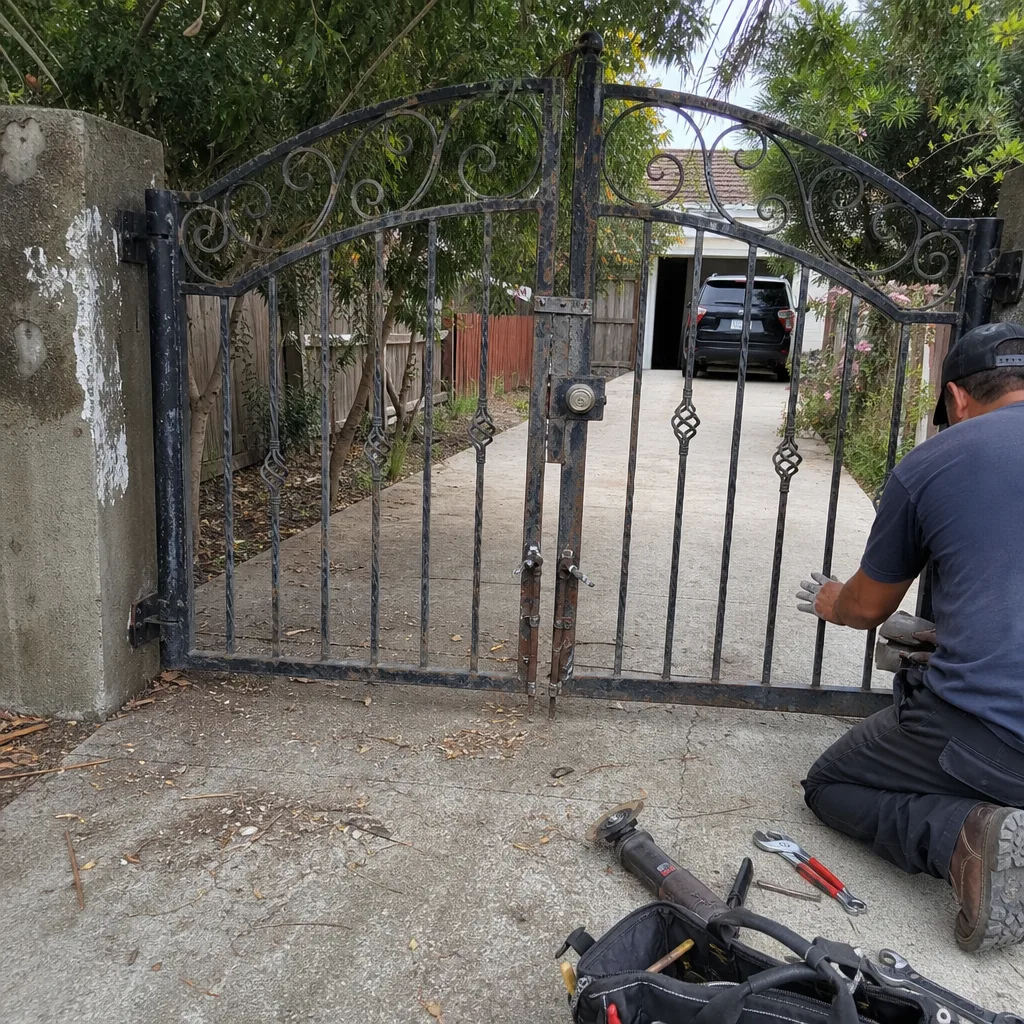 Before
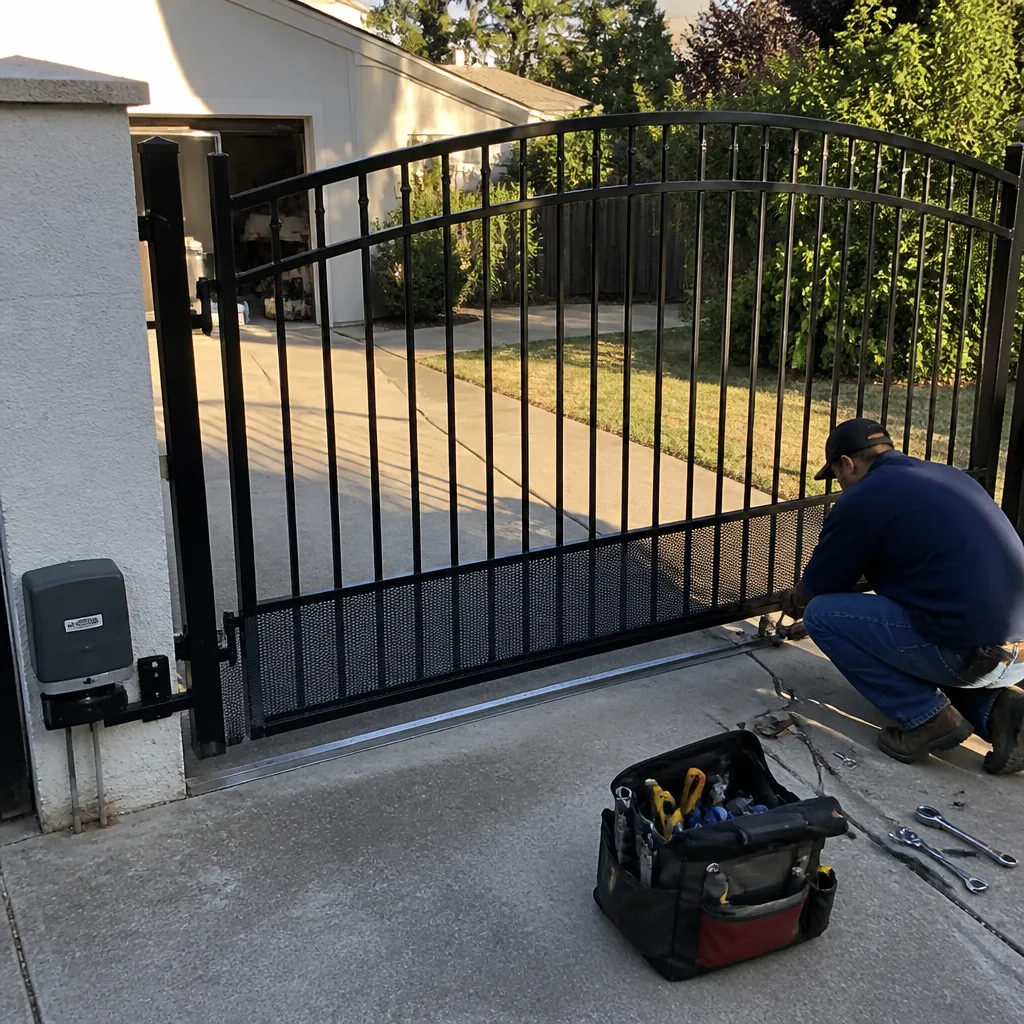 After
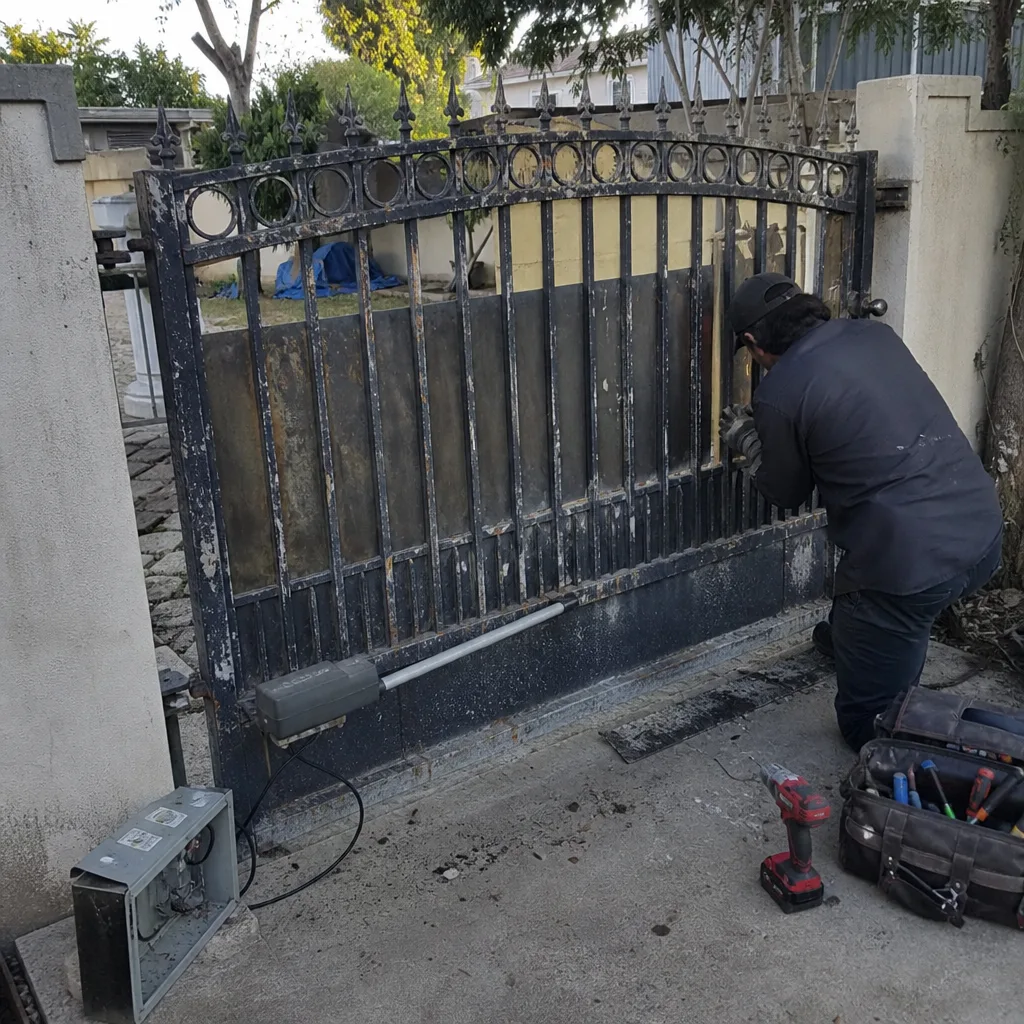 Before
 After
 Before
 After